Project essentials
- Typology
- Heritage architecture › Archaeological conservation
- Materials
- Sattler PRO-TEX textile membrane · galvanized steel · plywood · high-strength cables · photovoltaic
- Concepts
- archaeological conservation · synclastic canopy · hyperbolic paraboloid · passive hygrothermal control · reversibility · minimal materiality · energy self-sufficiency · artificial topography
And the temple became a sustainable machine…
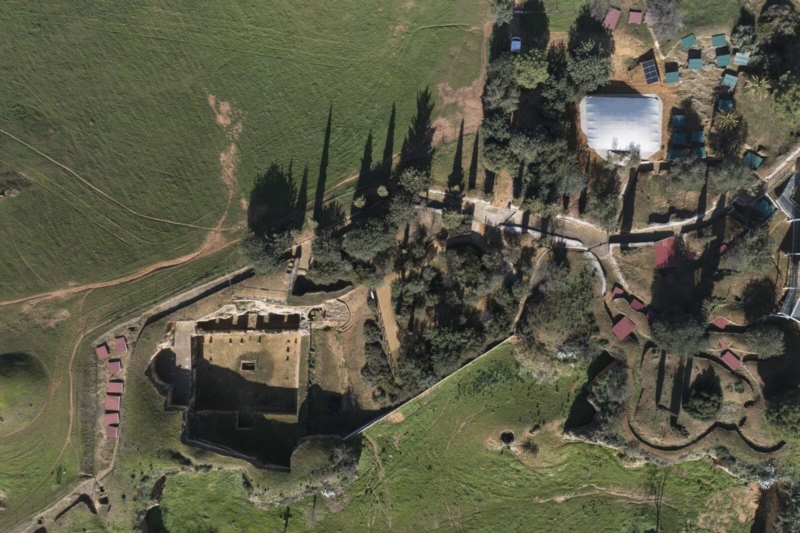
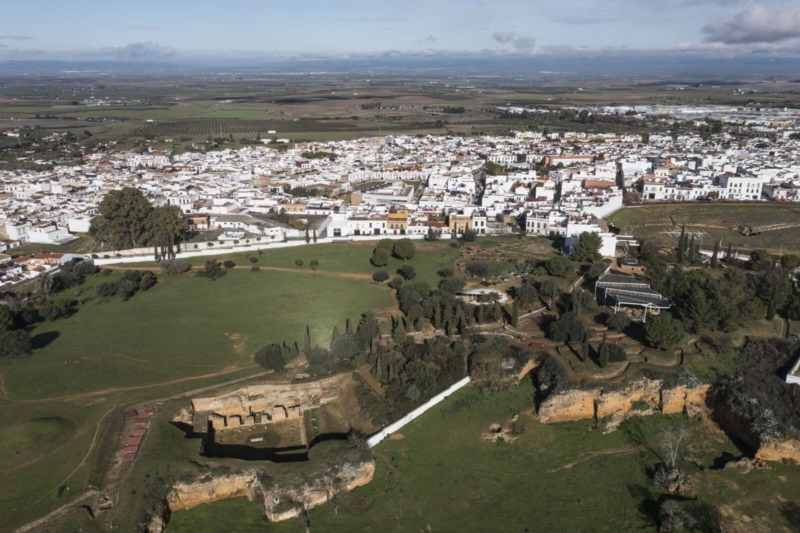
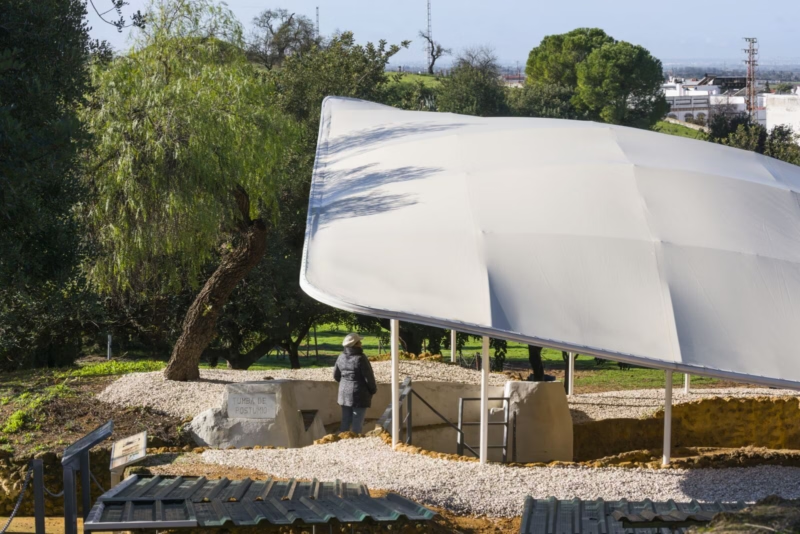
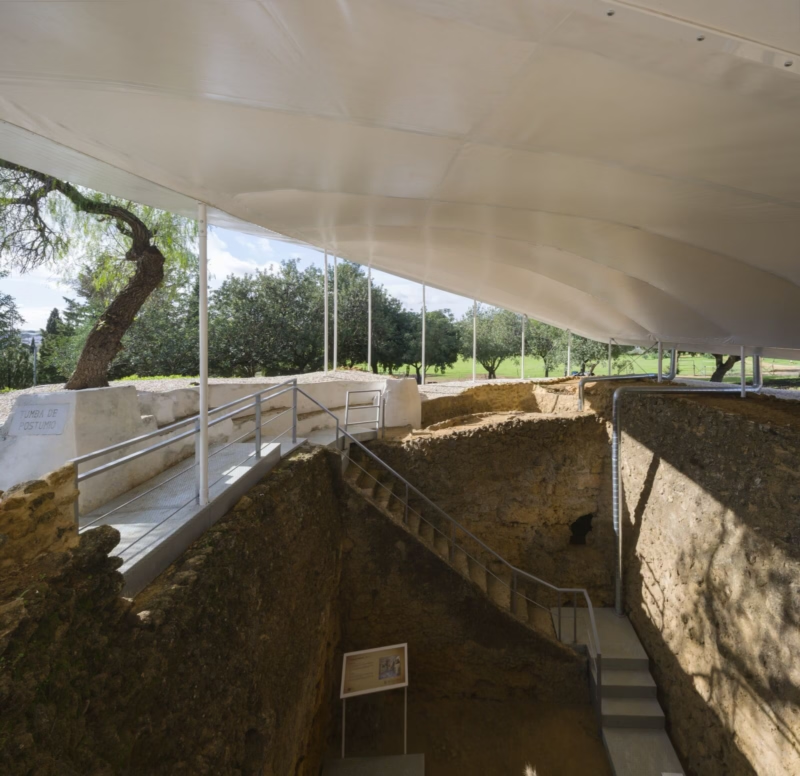
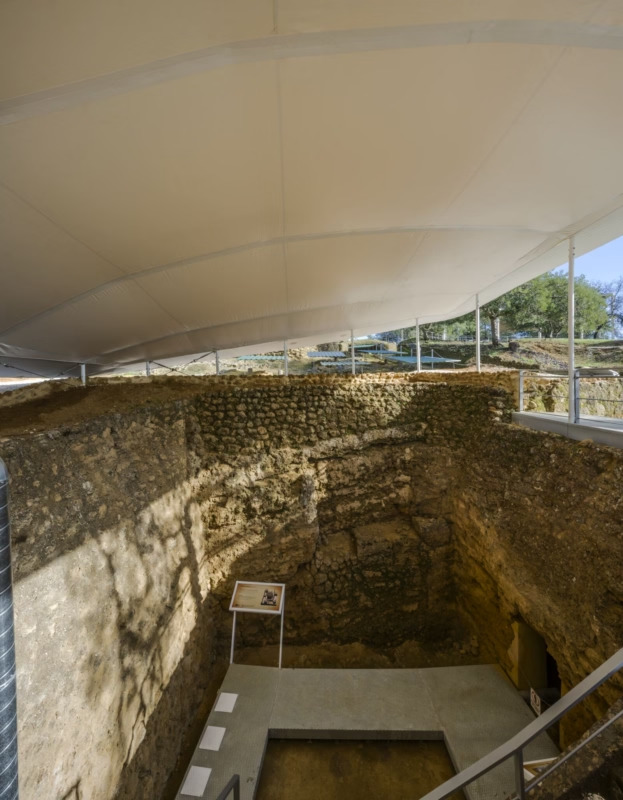
At the Necropolis of Carmona, two adjacent Roman tombs from the 1st century AD faced severe conservation issues. The Tomb of Postumio consists of a large courtyard sunk five metres into the calcarenite rock, measuring 7.00 × 7.70 m², giving access to a burial chamber with niches for urns and an inhumation burial. The Tomb of Tres Puertas is a hypogeum-type collective tomb with three chambers sharing a common access shaft. The porosity of the rock, rainwater runoff, relative humidity, solar radiation, and CO₂ concentration were compromising both the remaining pictorial traces and the geometry of the chambers themselves.
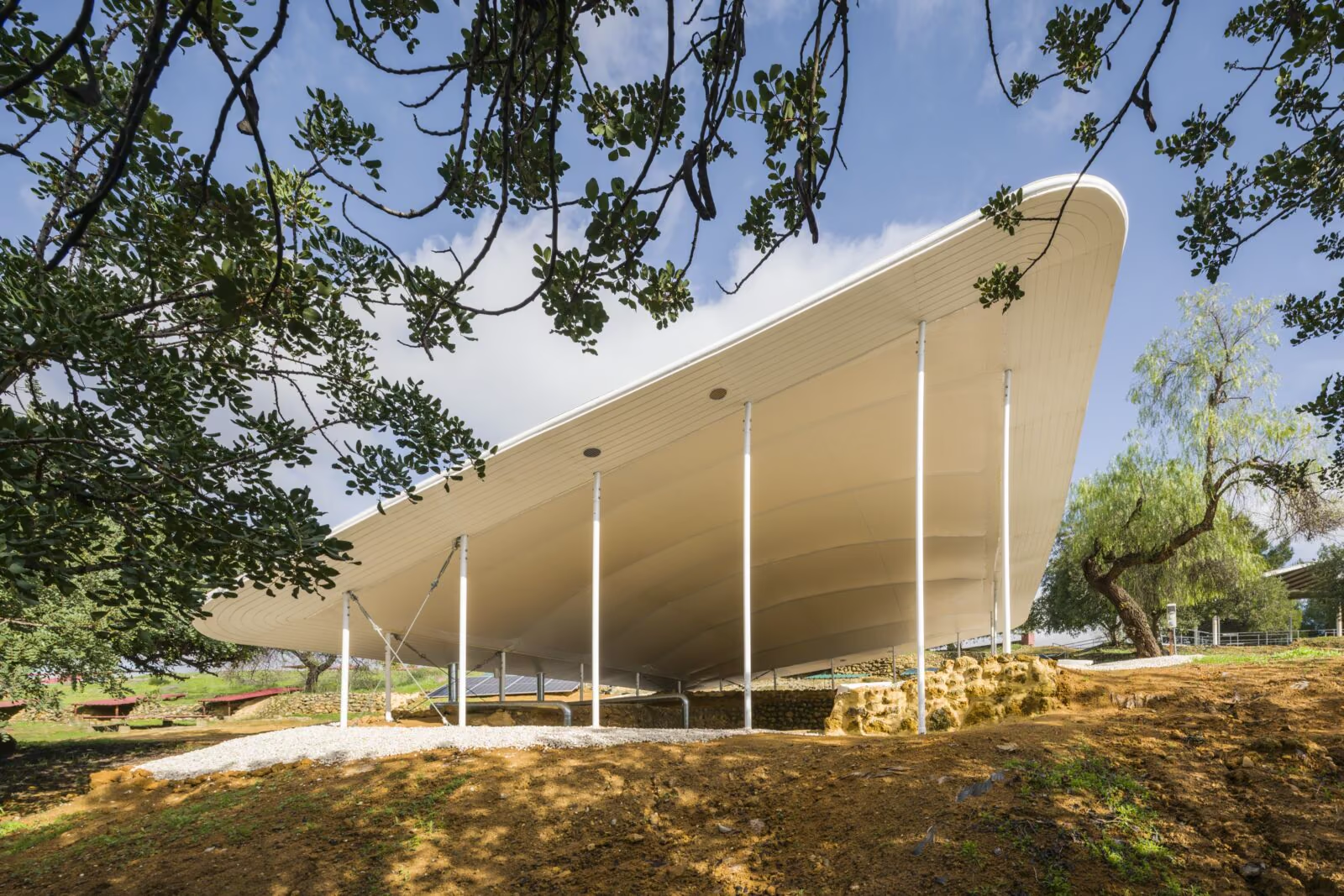
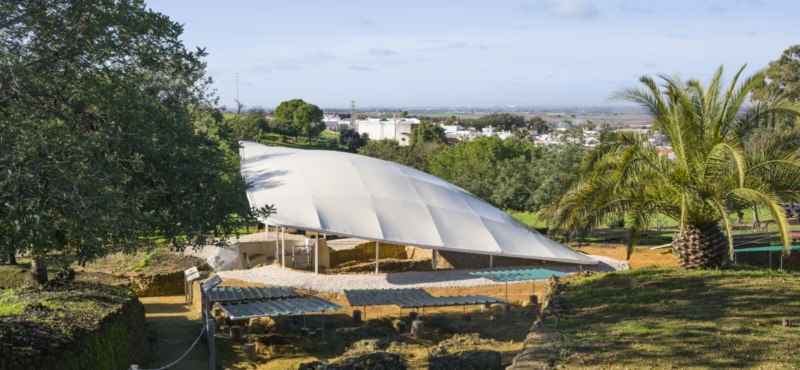
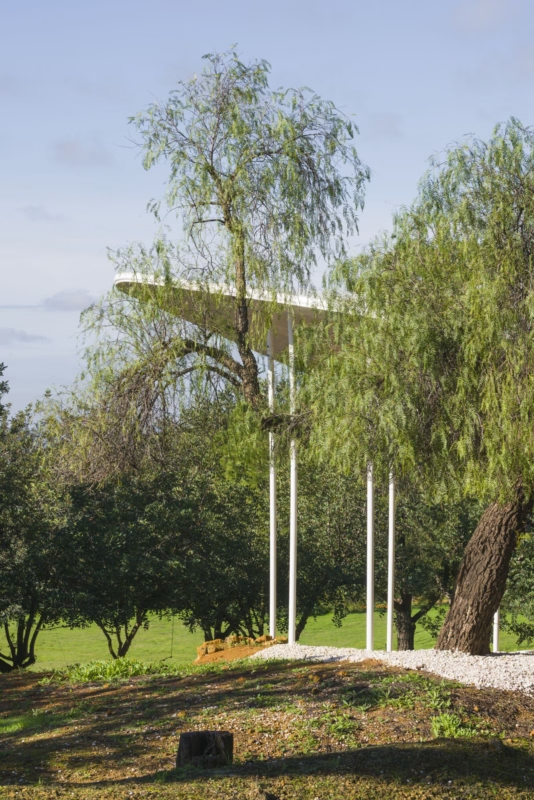
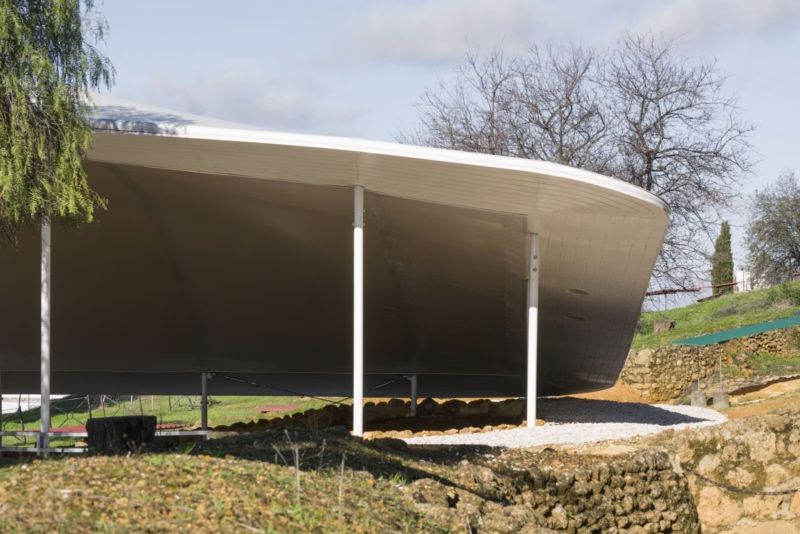
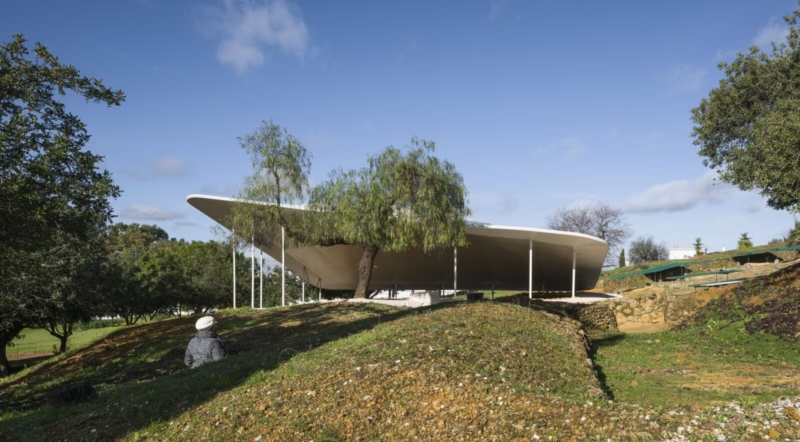
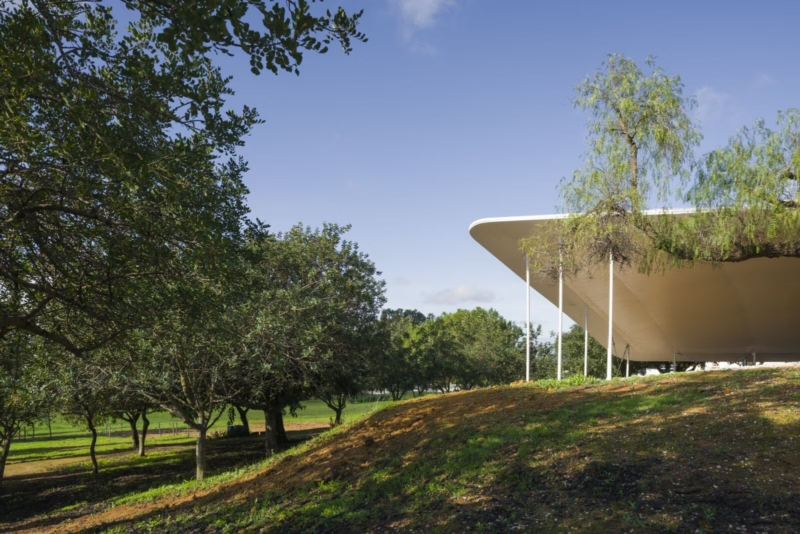
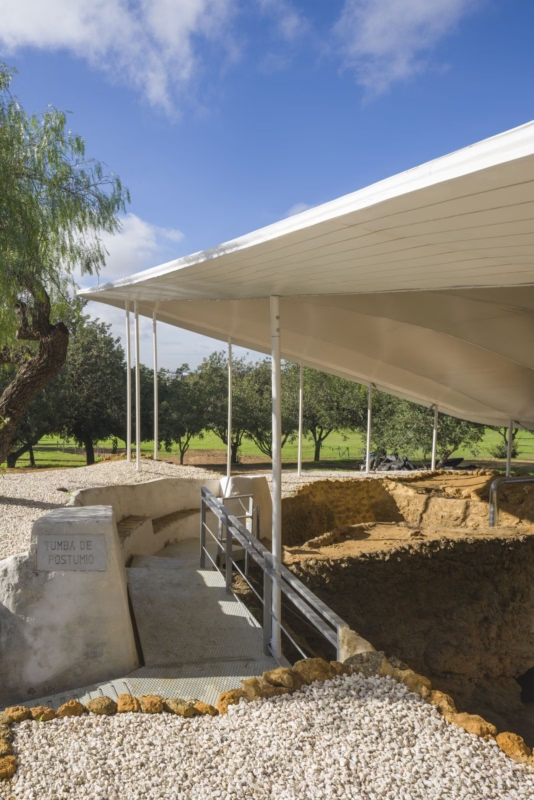
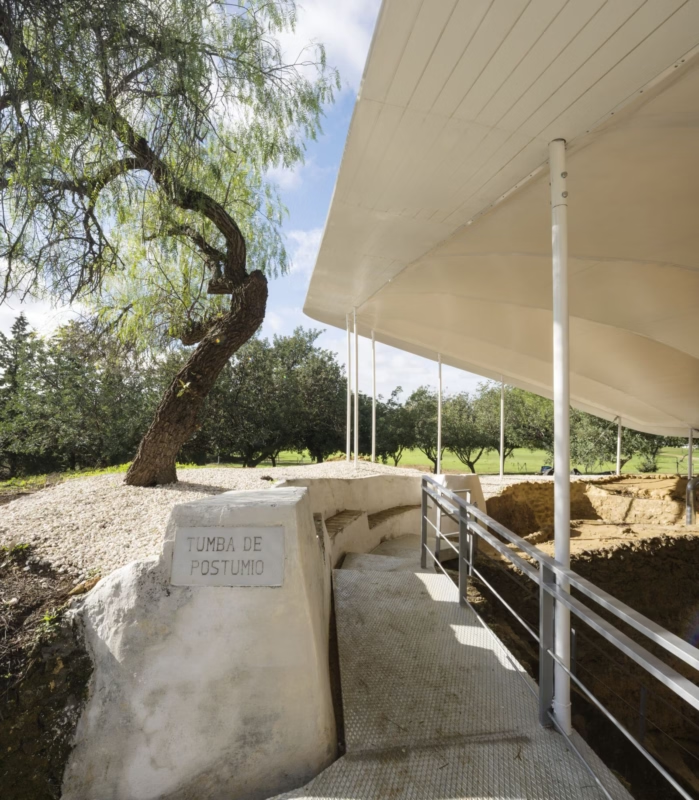
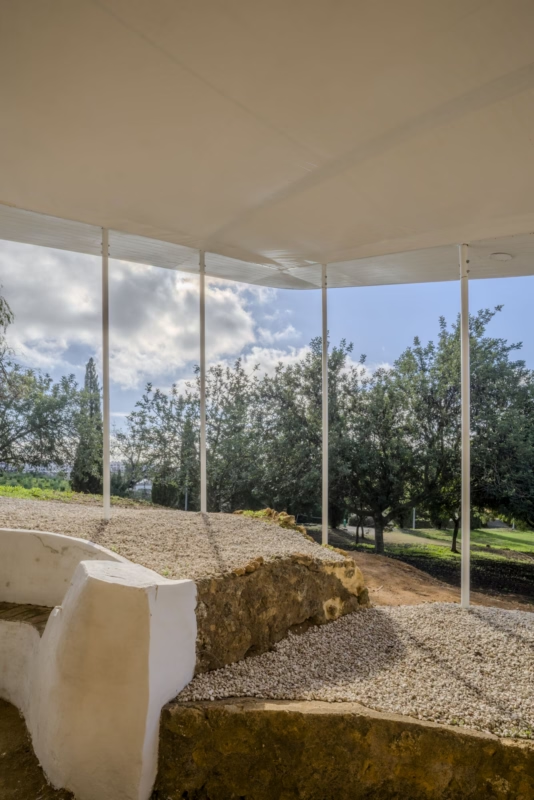
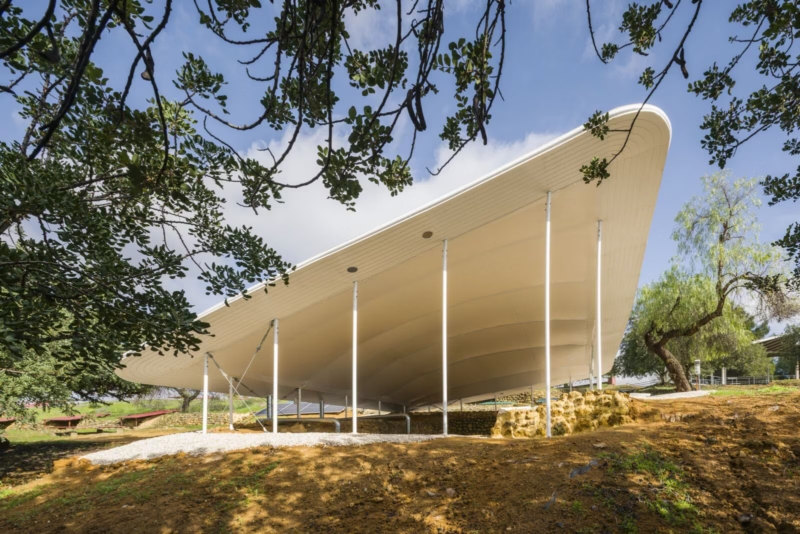
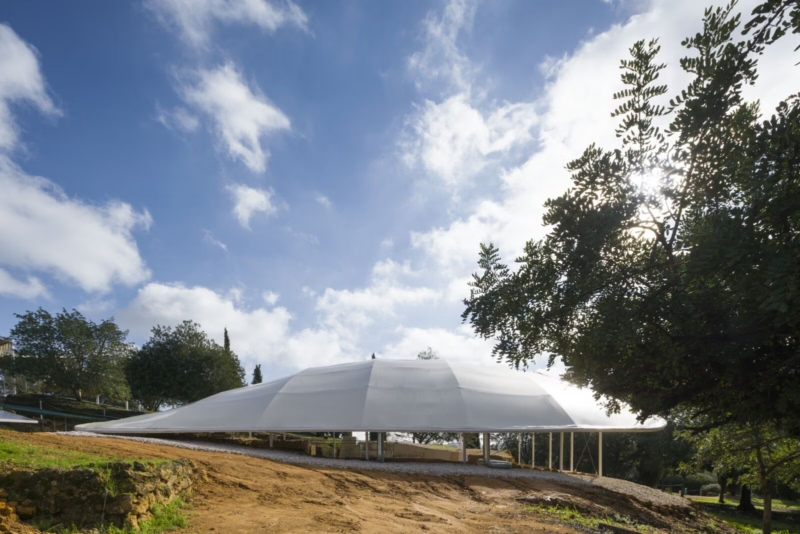
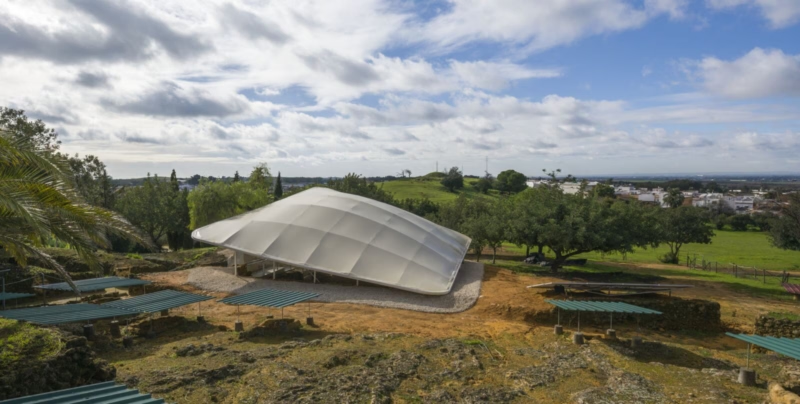
Nd_Arquitectos designed an all-encompassing canopy that integrates both tombs into a single ensemble. With sufficient height and curvature, it stands out only as much as necessary in the landscape, appearing as a fragment of artificial topography that emerges to protect the site. The supports touch the ground with the least possible material, reinforcing the idea of a small temple that singularizes the ensemble. A perimeter plywood frieze with centripetal texture resolves the transition between supports and membrane, focusing attention inward.
The structure is resolved through a synclastic mesh of variable-curvature arches with hyperbolic paraboloid edge geometry, parametrically optimized for solar control, wind and snow loads, and thermal regulation. The entire system was fully fabricated off-site using CHS 70.3 S275 J0 tubular profiles and high-strength cables, assembled on-site with bolted connections: completely reversible.
The canopy is a machine. Between the two layers of Sattler PRO-TEX textile membrane, an active protection system is integrated: four in-line ventilation units with flow regulation dampers enable bidirectional air transfers between the exterior, the air chamber, and the hypogea. Open-source domotic sensors monitor temperature, relative humidity, CO₂, and atmospheric pressure every five minutes, adapting ventilation protocols in real time. The ensemble is energy self-sufficient through a photovoltaic self-consumption plant connected to the Archaeological Complex network.
A new system of reversible walkways provides accessibility to both tombs and enhances the interpretation of the Tomb of Postumio. Beneath the walkways, the ventilation system for the burial chambers is integrated.
The result is a project of minimal materiality, industrialized, quick to assemble, reversible, recyclable, and self-sufficient, with an environmental impact below 100.0 kg CO₂ equivalent.
I learned from the trees to let the wind pass through. — Manoel de Barros
Source: project report by Nd_Arquitectos.
Project data
- Architects
- Juan Carlos Gómez de Cózar, Manuel Ordóñez Martín
- Client
- Regional Government of Andalusia
- Structural engineering
- Sombreando S.L.U.
- Services / MEP
- R&C Nueva Infraestructura S.L.
- Other specialists
- Architects: Juan Carlos Gómez de Cózar, Manuel Ordóñez Martín
Collaborators: Rosa Benítez Bodes, Neli Chyzheuskaya, Íñigo Ariza López
Fab-Lab ETSAS: Juan Carlos Pérez Juidías
Archaeology: José Ildefonso Ruiz Cecilia, Ignacio Rodríguez Temiño
Structure: Sombreando S.L.U.
Double textile covering: Espacio Artex S.L.
Installations: R&C Nueva Infraestructura S.L.
Surveying: Solgeo Integrales S.L.
Earthworks: Turbepal S.L.
Quality control: LABRUM S.L.
Textile membranes: Sattler AG
Photovoltaic: SAJ Electric
Sensors: Legrand Group España - Collaborators
- Rosa Benítez Bodes, Neli Chyzheuskaya, Íñigo Ariza López, Juan Carlos Pérez Juidías (Fab-Lab ETSAS), José Ildefonso Ruiz Cecilia (Archaeology), Ignacio Rodríguez Temiño (Archaeology)
- Companies
- Double textile covering: Espacio Artex S.L.
Surveying: Solgeo Integrales S.L.
Earthworks: Turbepal S.L.
Quality control: LABRUM S.L. - Design
- 2021-2025
- Construction
- 2025
- Area
- 166 m²
- Additional credits
- Funding: Excellence Project Grant, Andalusian Plan for Research (2021). Regional Government of Andalusia.
- Photography
- © Jesús Granada, 2026
- Materials
- Sattler AG · (Textile membranes) — PRO-TEX
SAJ Electric · (Photovoltaic)
Legrand Group España · (Domotic sensors)
In the media
- Metalocus · (2025)
- Designboom · (2025)
Photographic report
- Inventory number
- JG1263
- Production date
- December 2025
- Commission
- Nd_Arquitectos
- Cameras
- Sony α7RII · Hasselblad L1D-20c
- Lenses
- Canon TS-E 17 mm f/4L · 24 mm f/3.5L II · 50 mm f/2.8L Macro
Canon EF 70-200 mm f/4L USM · Hasselblad 28 mm f/2.8–f/11 - Postproduction
- María Arias de Saavedra
- Digital archive
- TIFF 8-bit · Adobe RGB 1998 · resolution 30 × 50 cm @ 400 ppi (medium size)
- Photographs
- 39 TIFF files · request license →