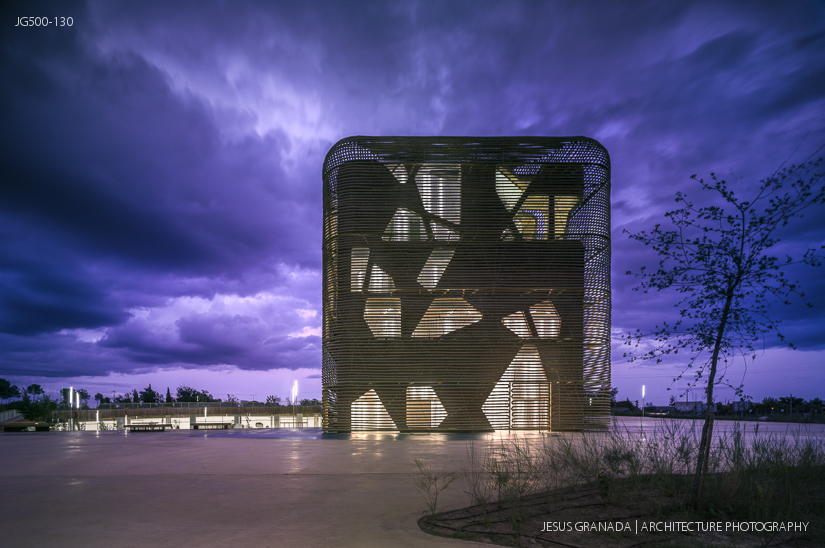
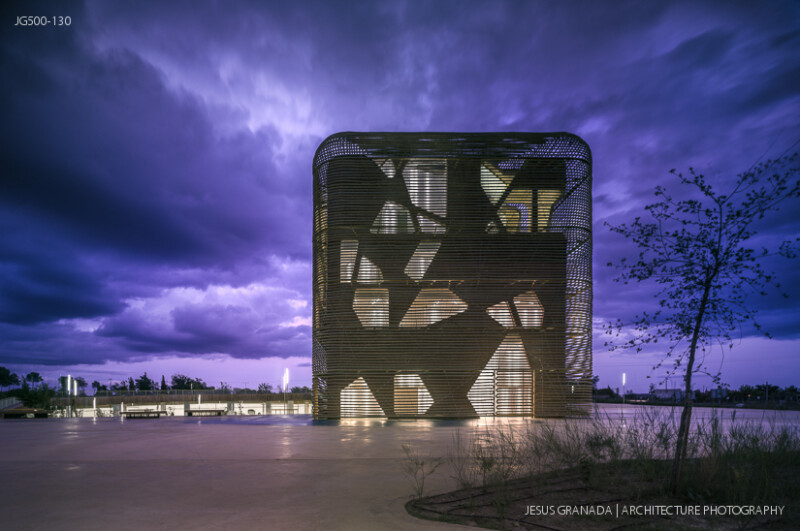
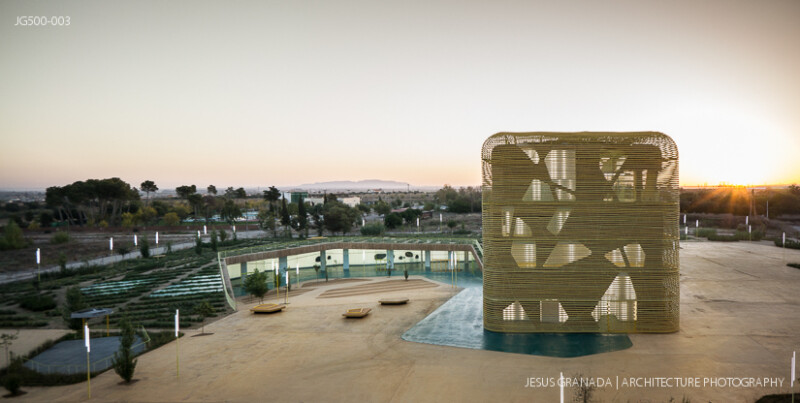
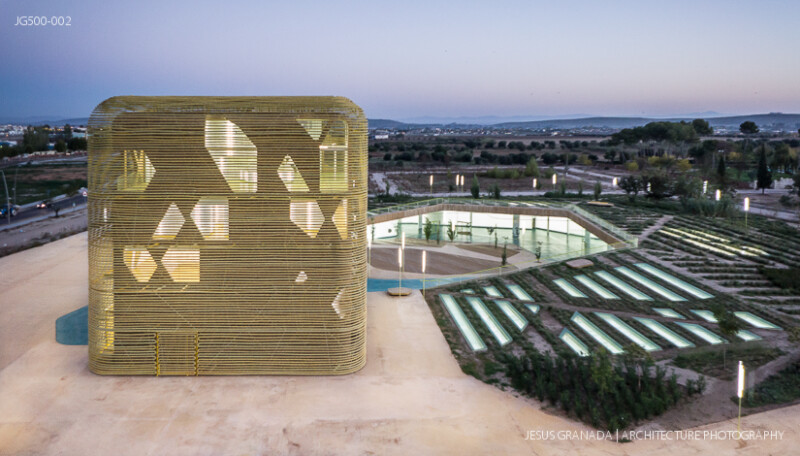
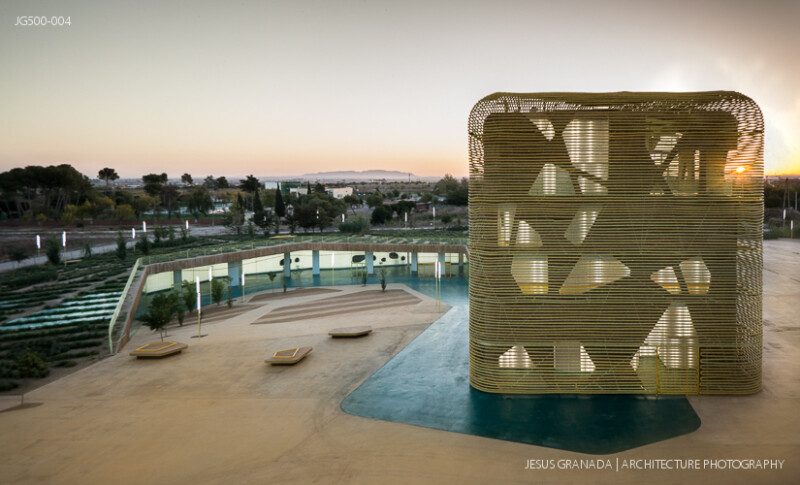
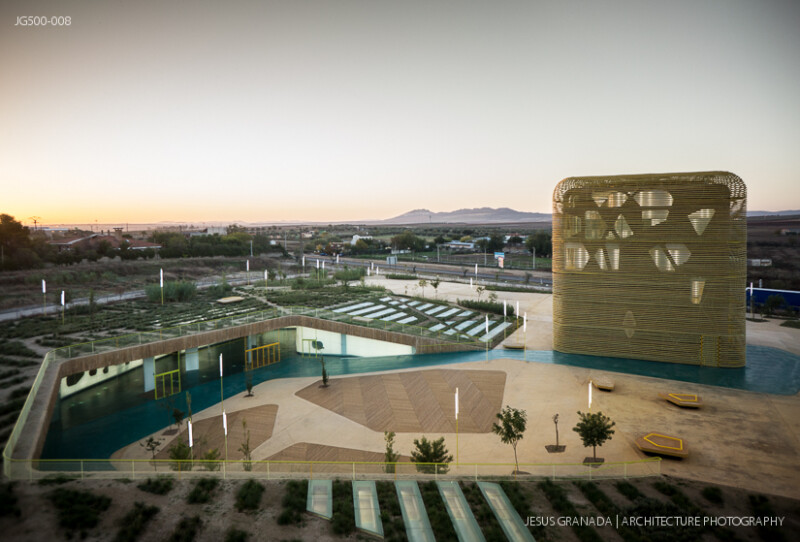
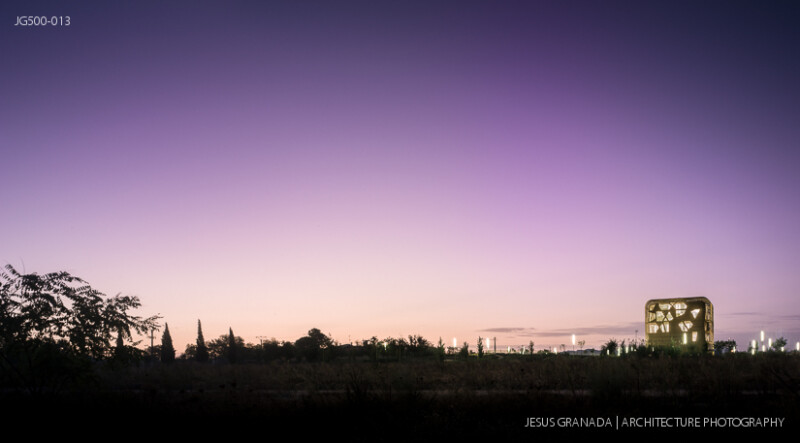
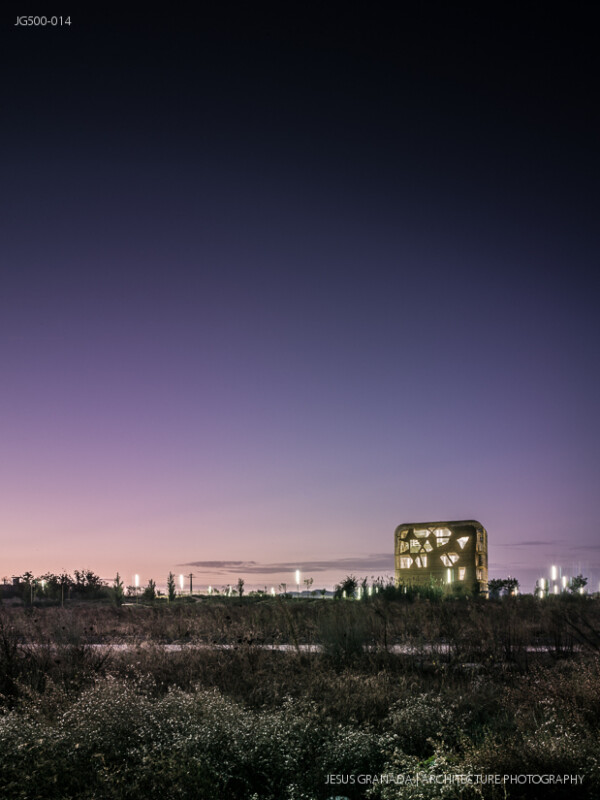
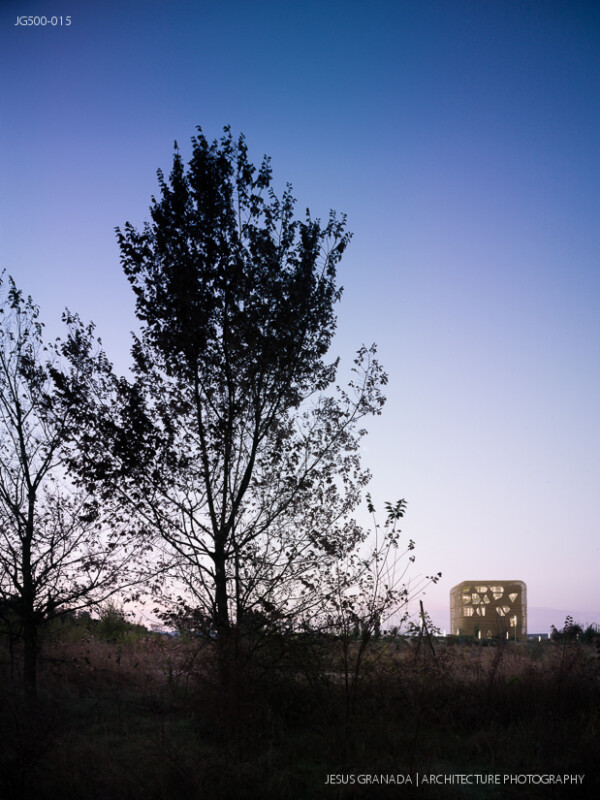
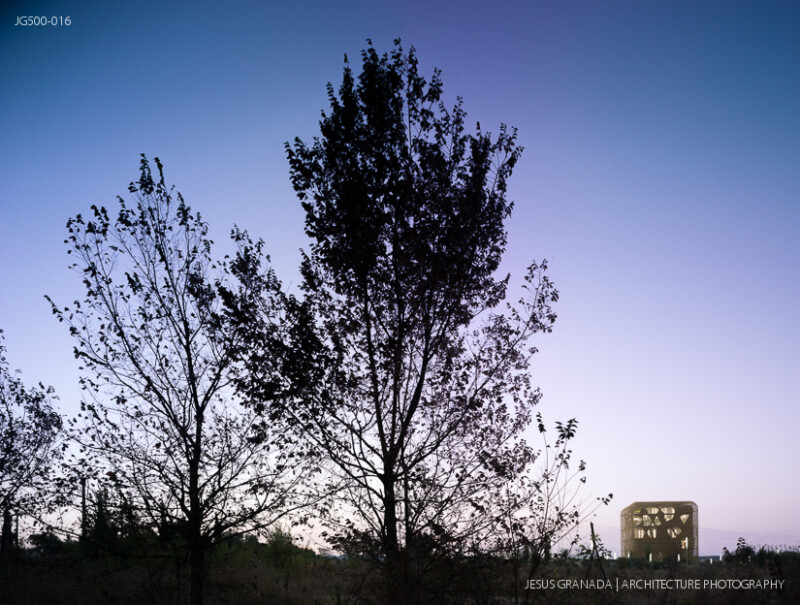
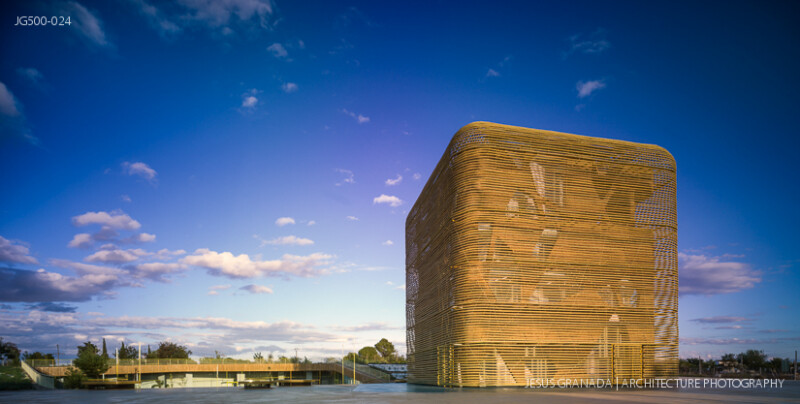
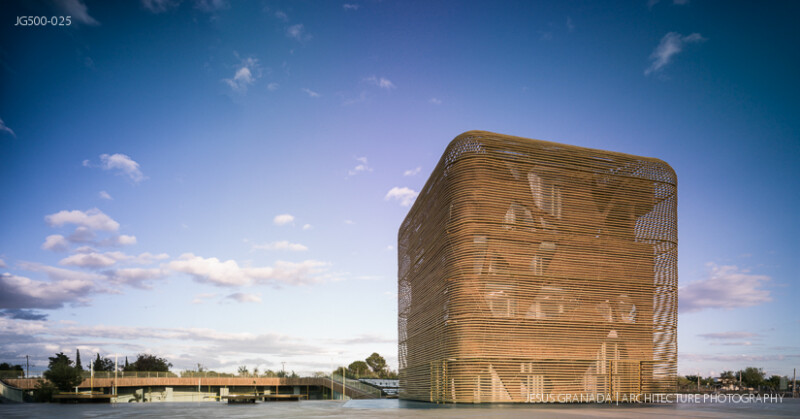
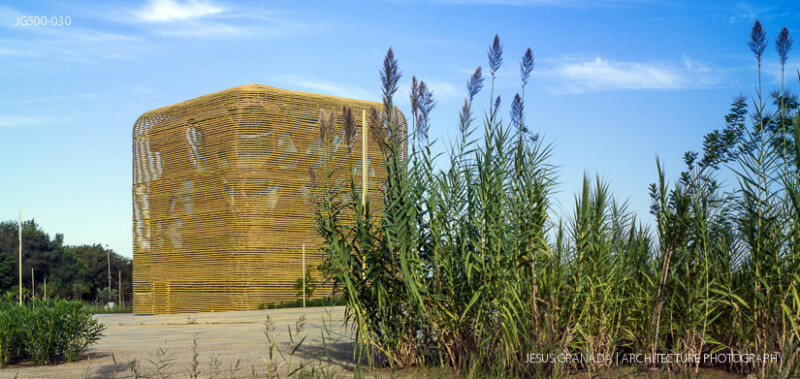
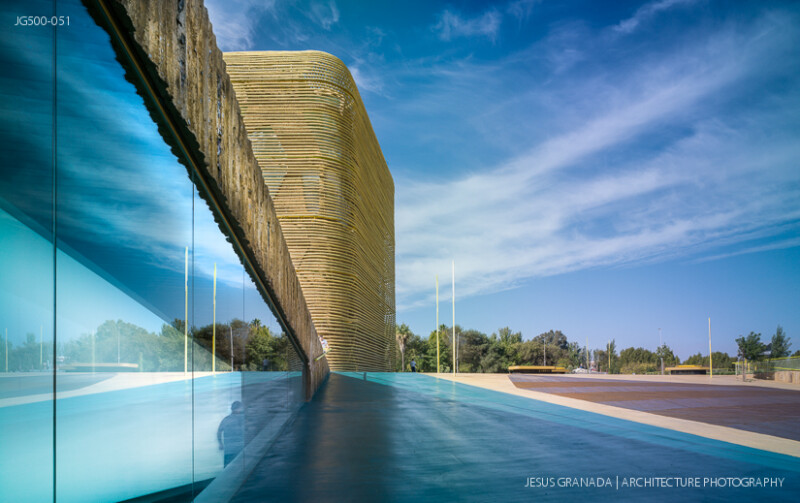
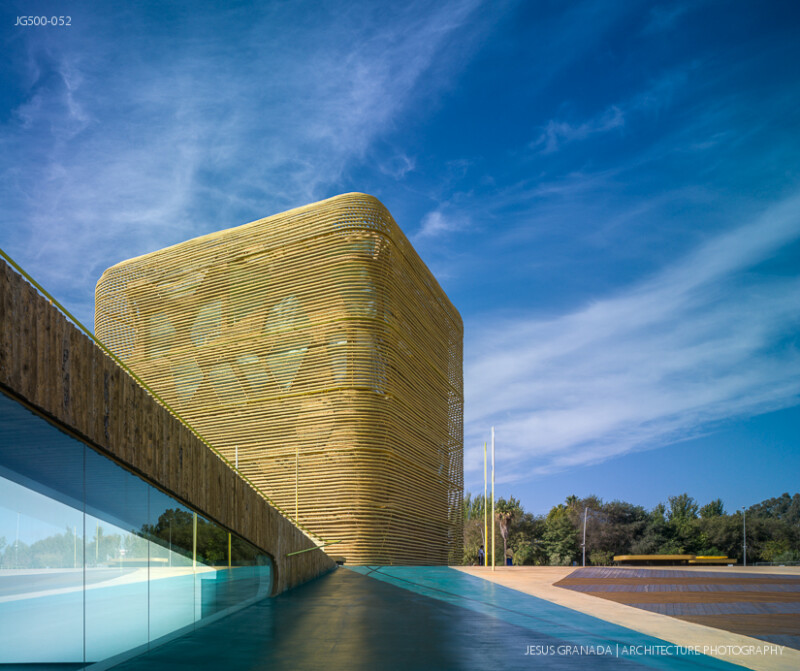
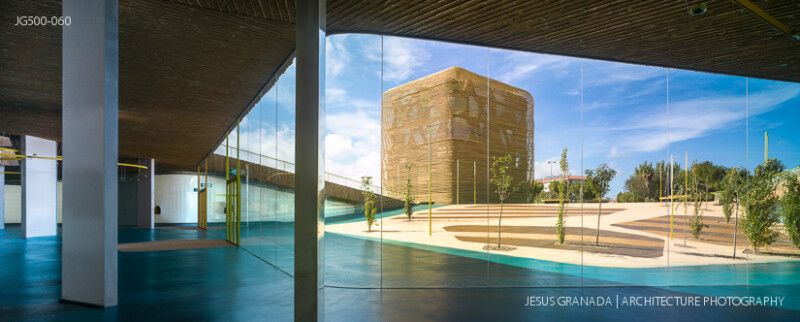
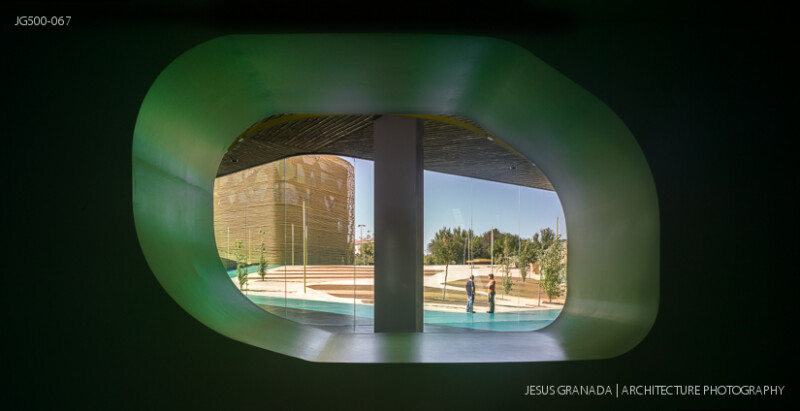
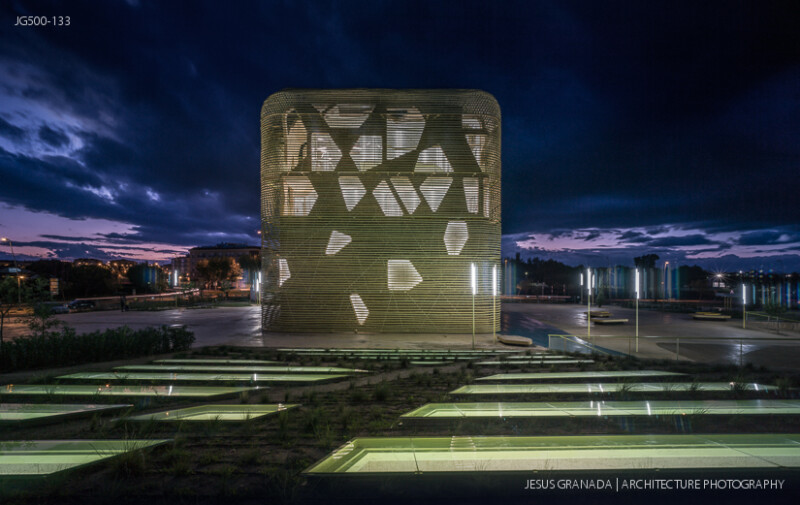
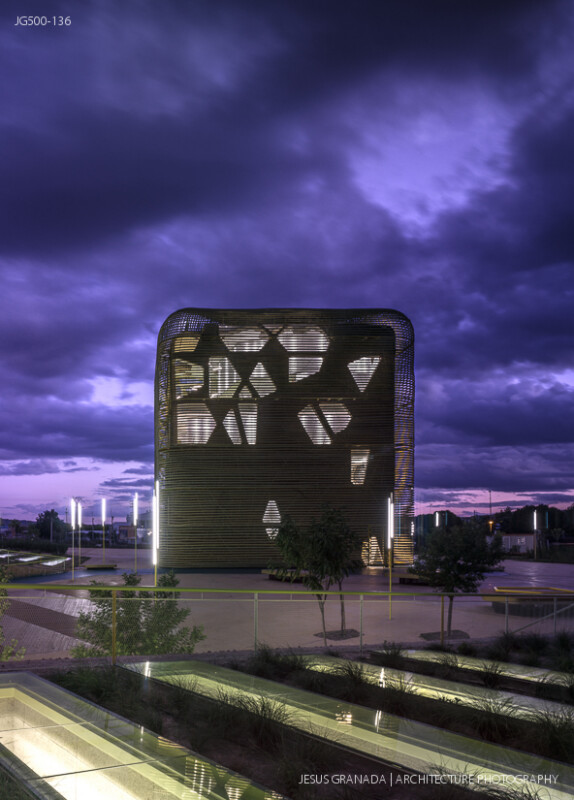
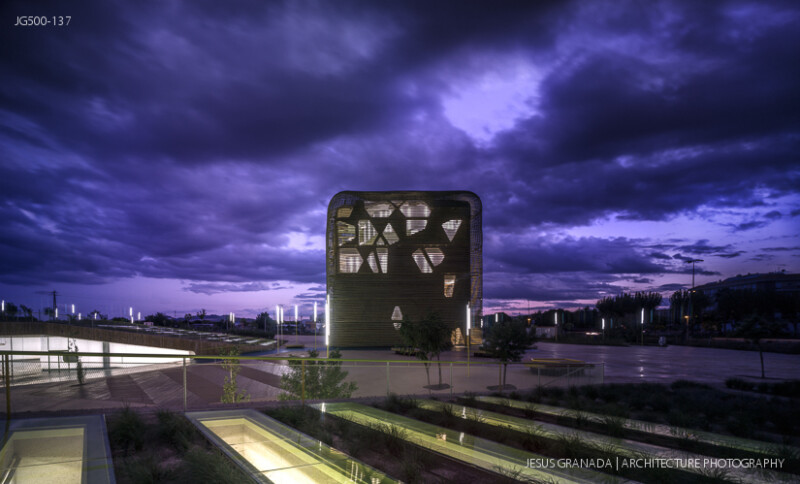
The “Vegas Altas” Congress and Exhibition Center grows in an ambiguous peripheral location, in a land that is both urban and agricultural boundary. Occupying the first or last crop field. The architectural proposal is intended to highlight this timeless condition of building belonging to the Vega as a free-standing building, floating in the countryside like a giant bale of straw with a flat horizon, free and fertile.
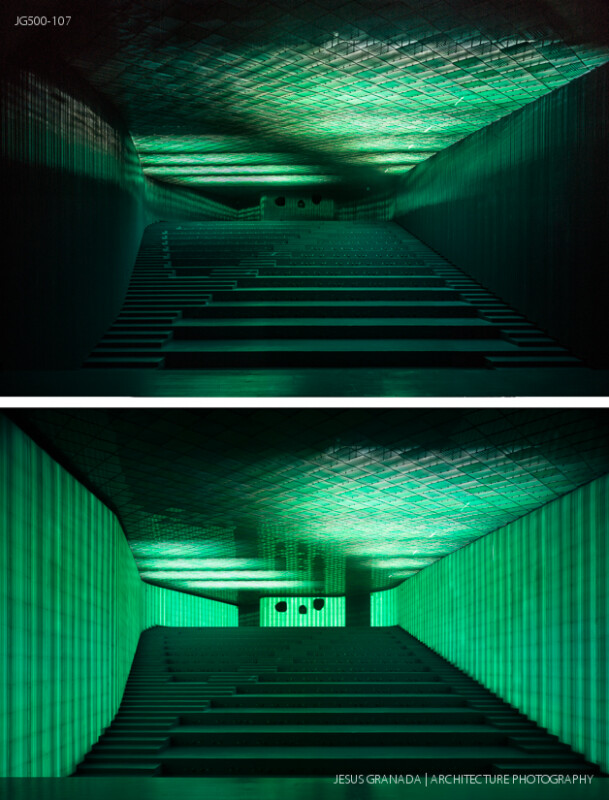
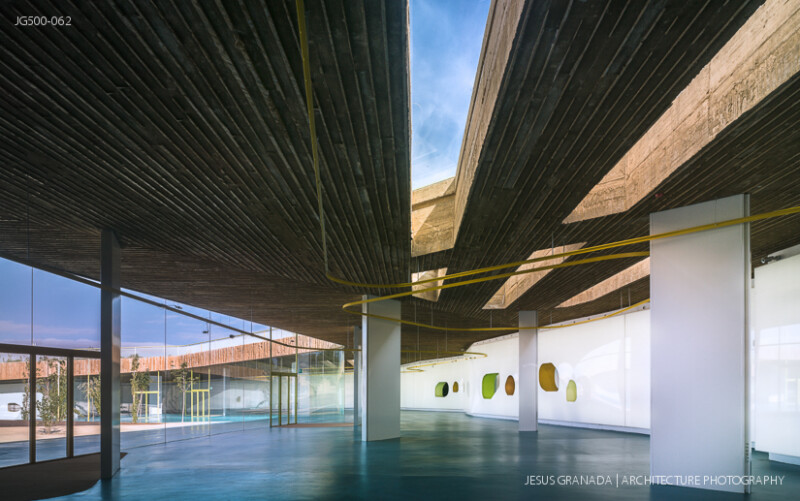
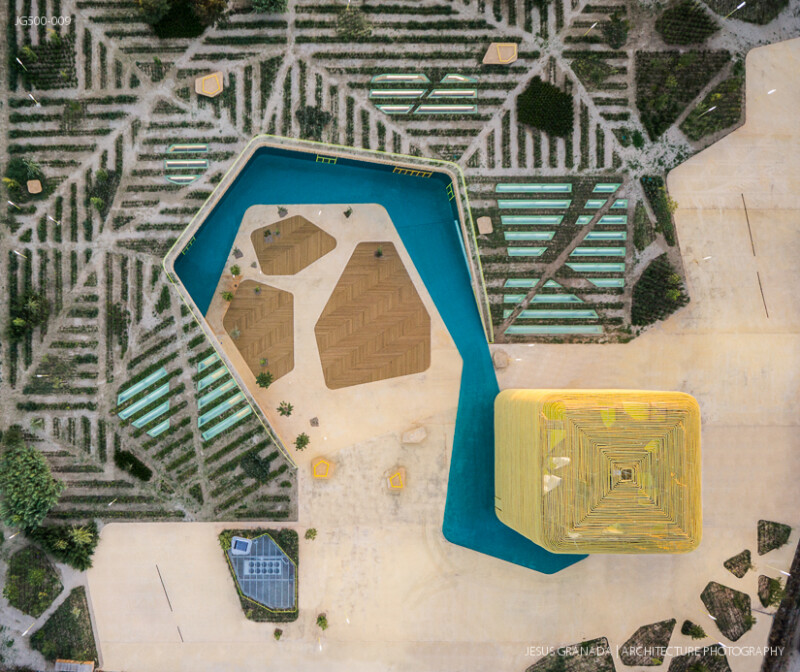
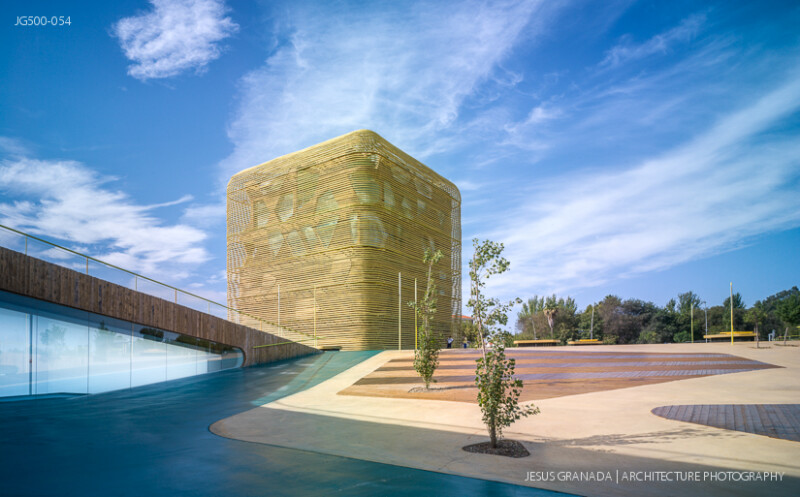
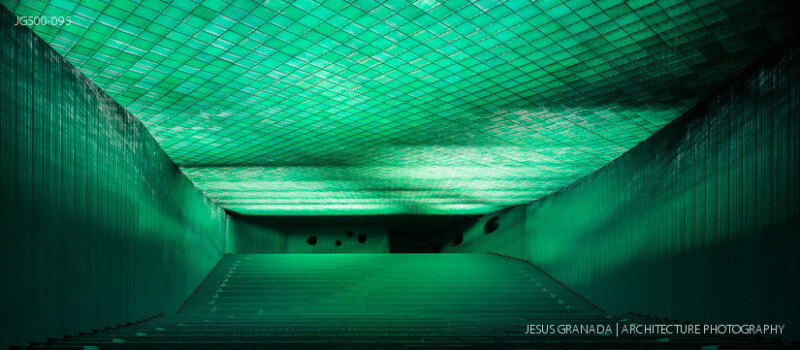
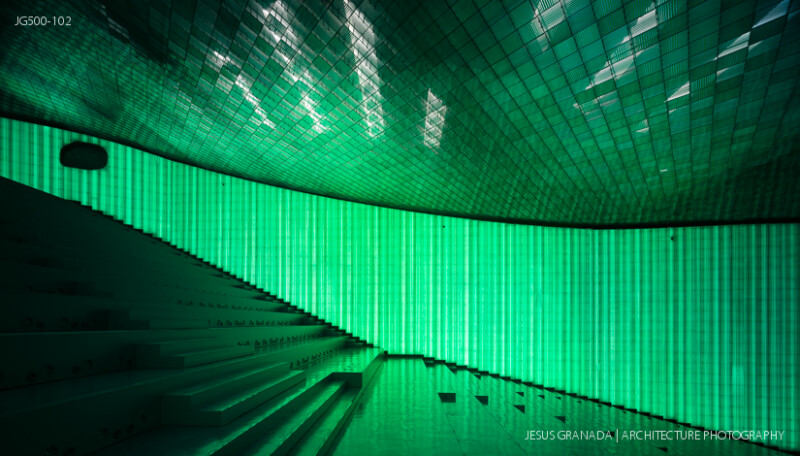
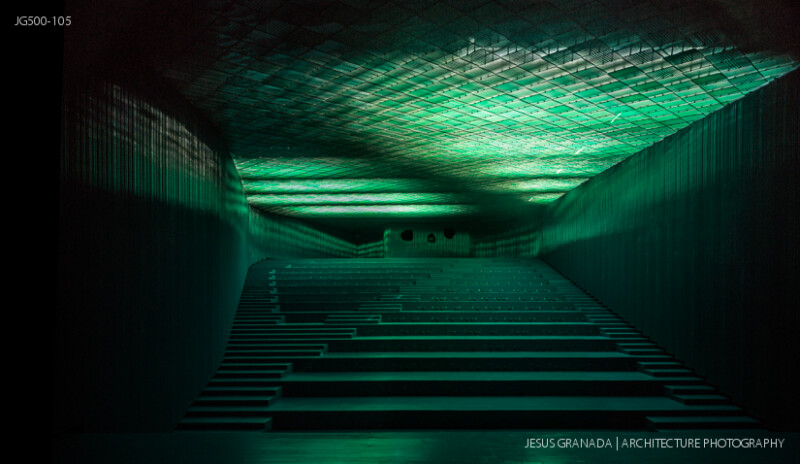
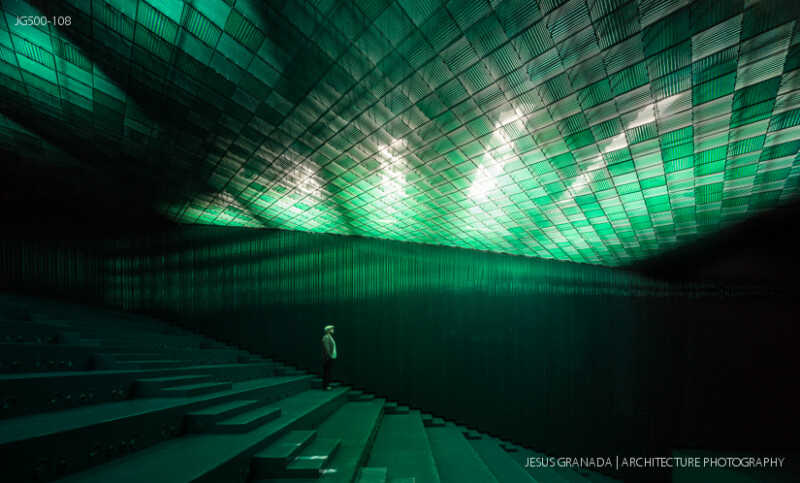
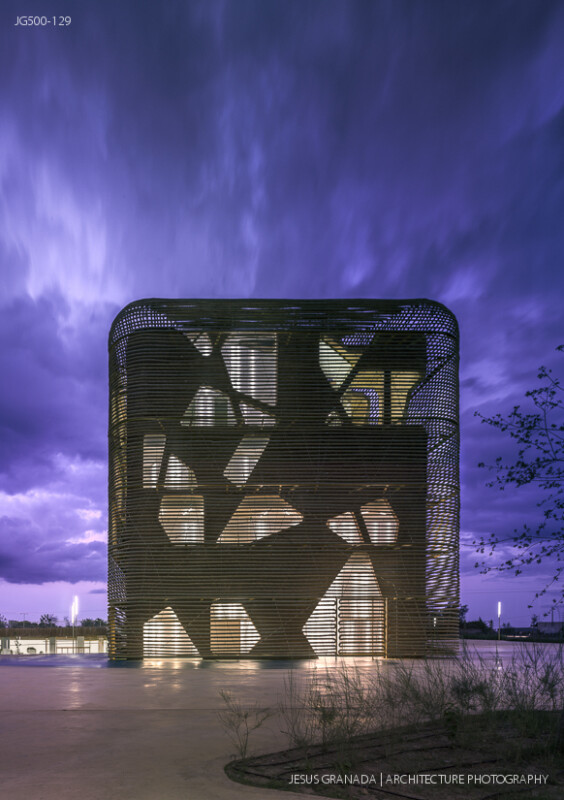
On one hand, it is a building that hides its status growing underground. The program is drawn on a half-buried ring that adapts to the terrain and to the boundaries of the plot. On the other hand, a cubic volume rises categorically. The only building perceived above ground, appropriate for both the visibility and the representativity required, home to the large volume needed to absorb the magnitude of a stage box. The building has a main auditorium with capacity for 800 spectators and a secondary hall for 275 spectators, flexibly adapted to the expected attendance and the nature of the event.
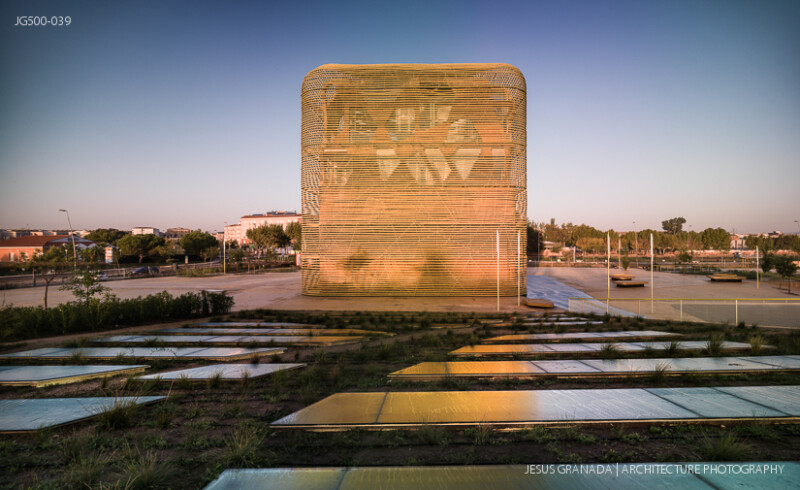
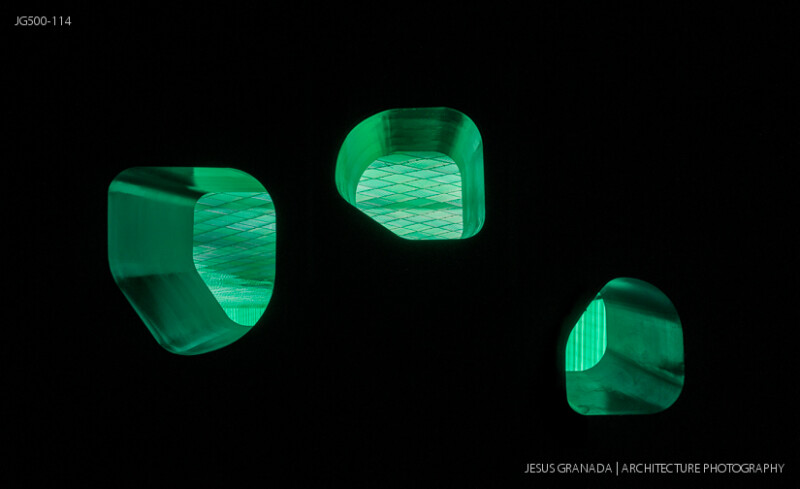
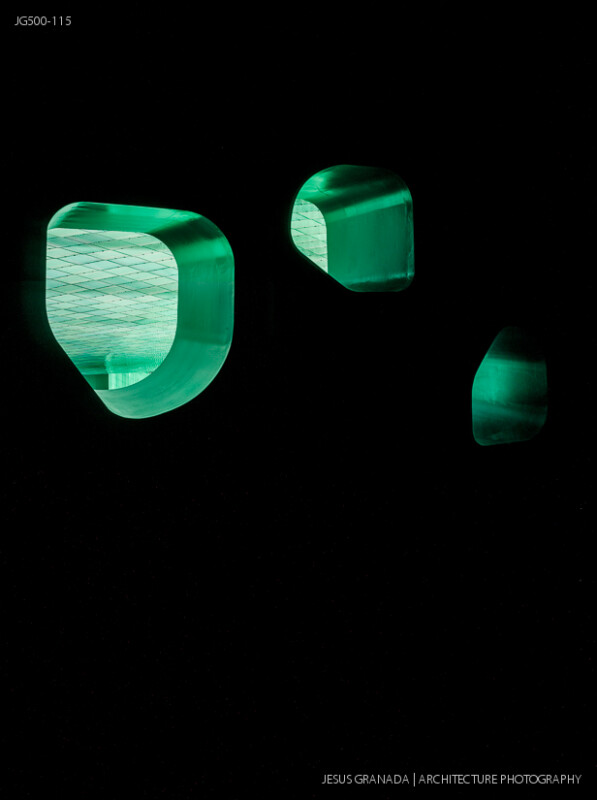
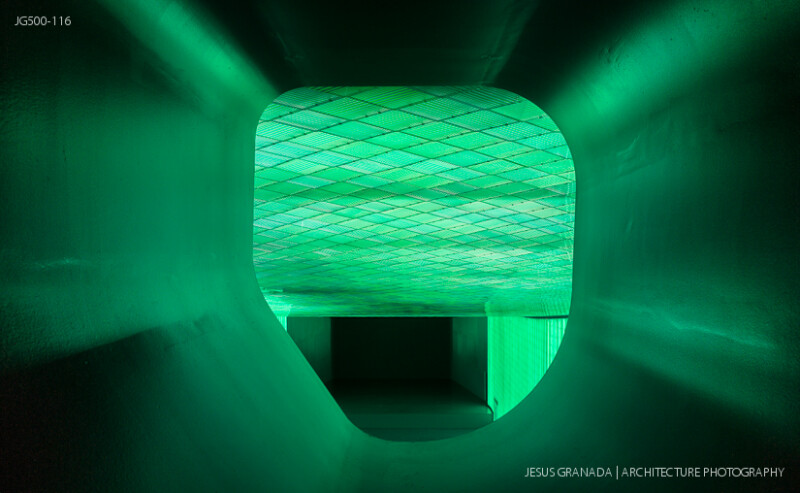
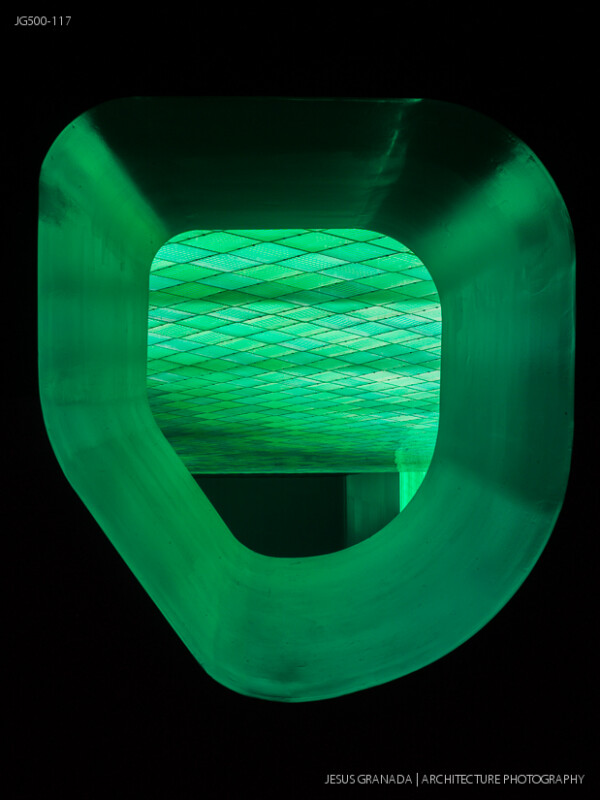
Thus, reinforces its urban character with a platonic geometry of a perfect cube, but in turn loses its built character as it is a field sown of strips of vegetation and its surface is ripped with skylights. The building gives ample public green space to the town with a green cover over most of the program and exhibition halls. The proposal extends like a large park and a square with a sloped ground serving both to create an access to the building and to perform as an outdoor auditorium.
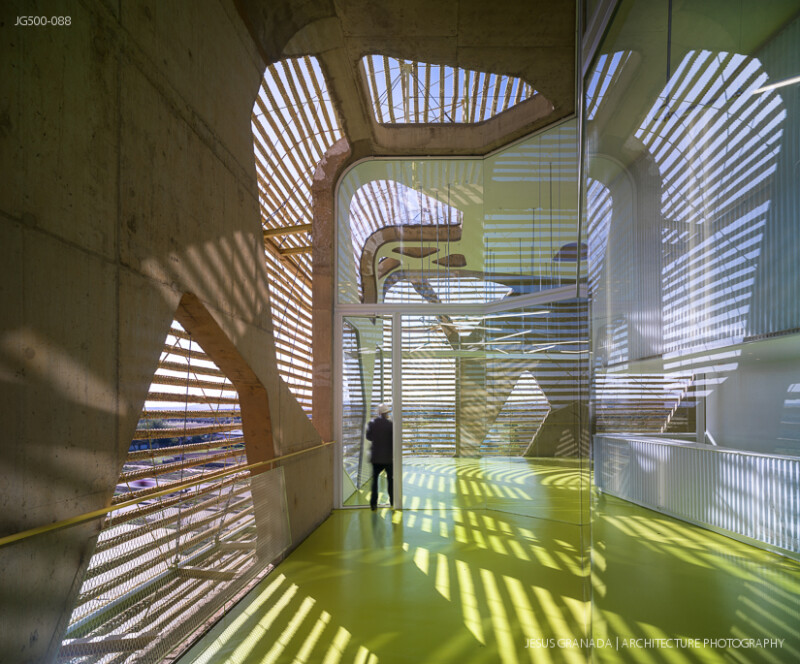
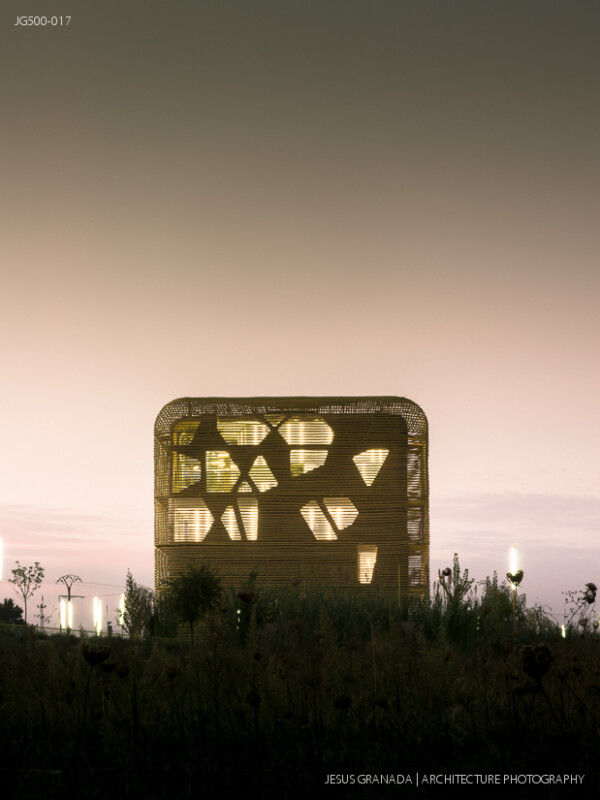
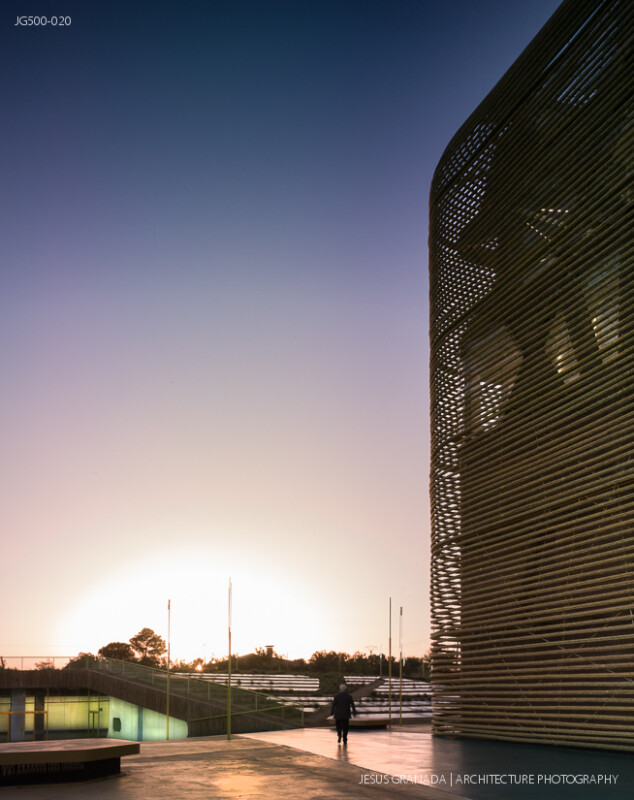
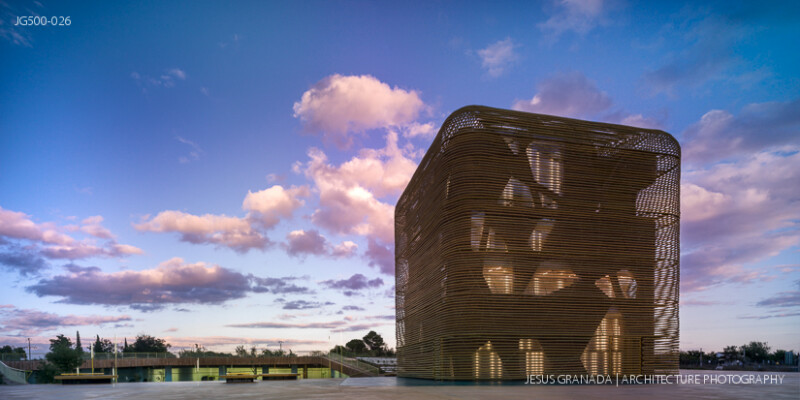
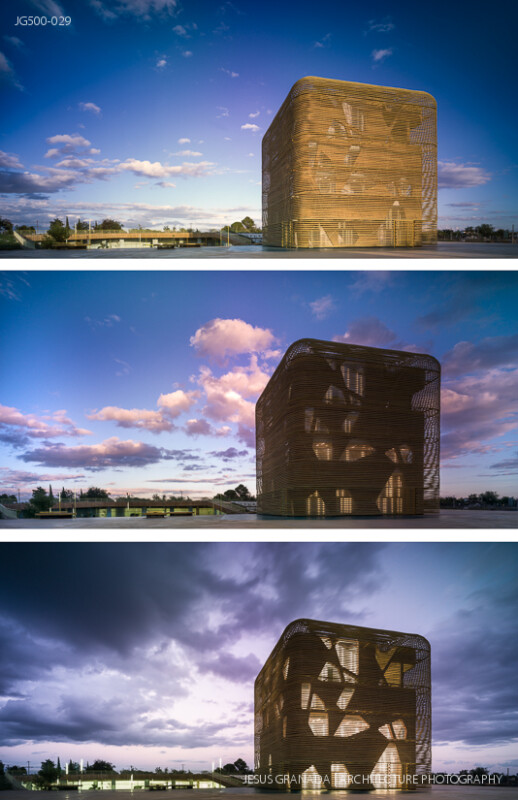
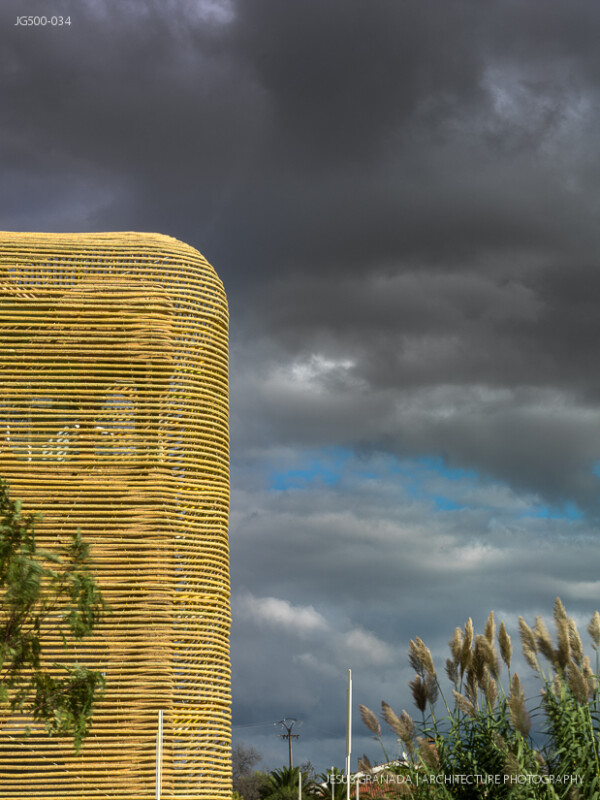
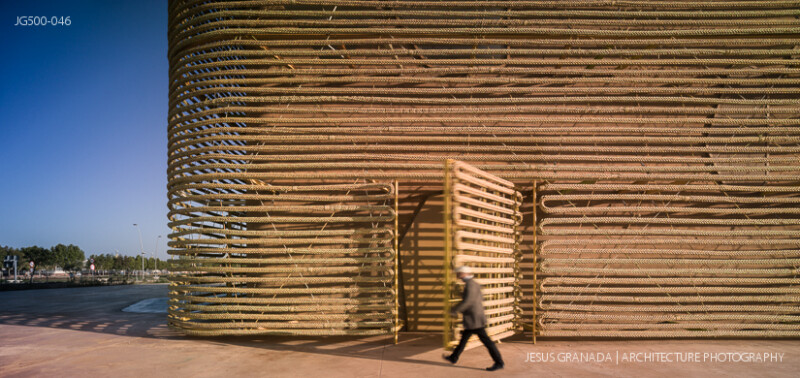
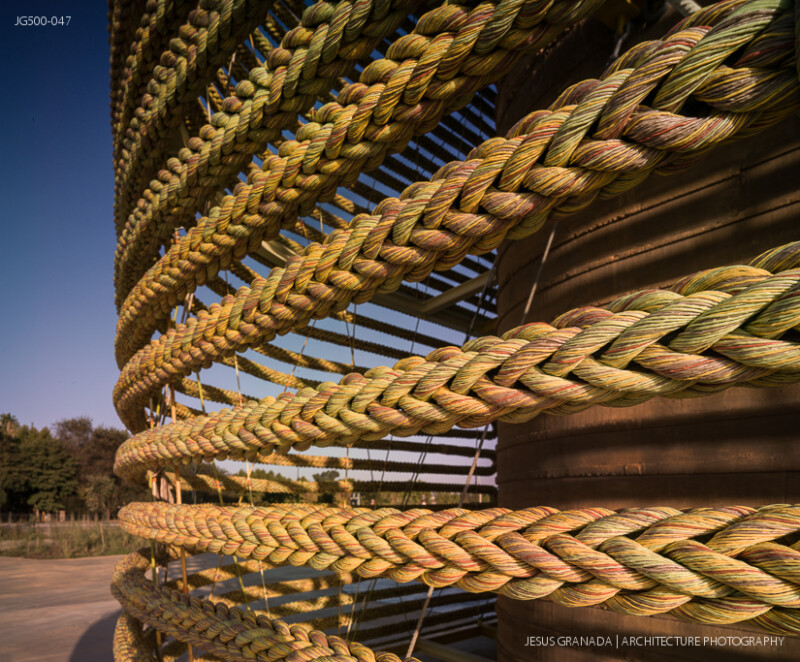
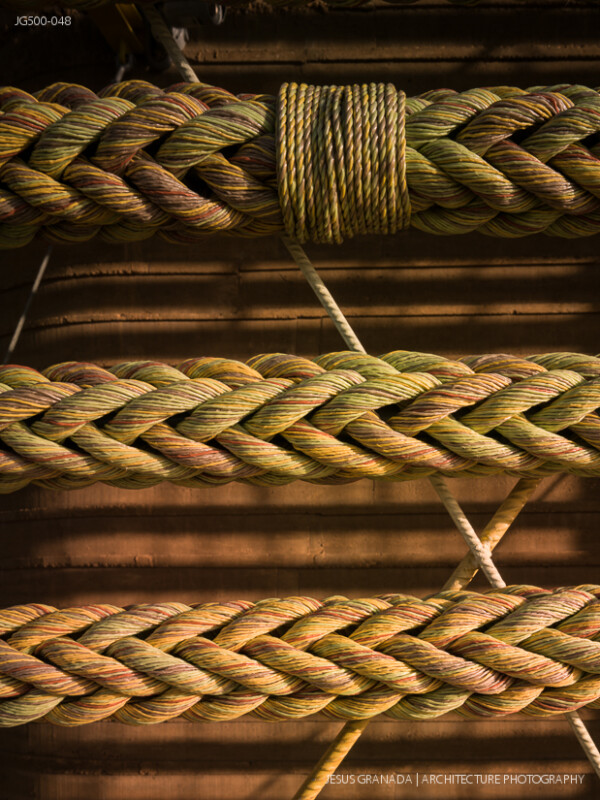
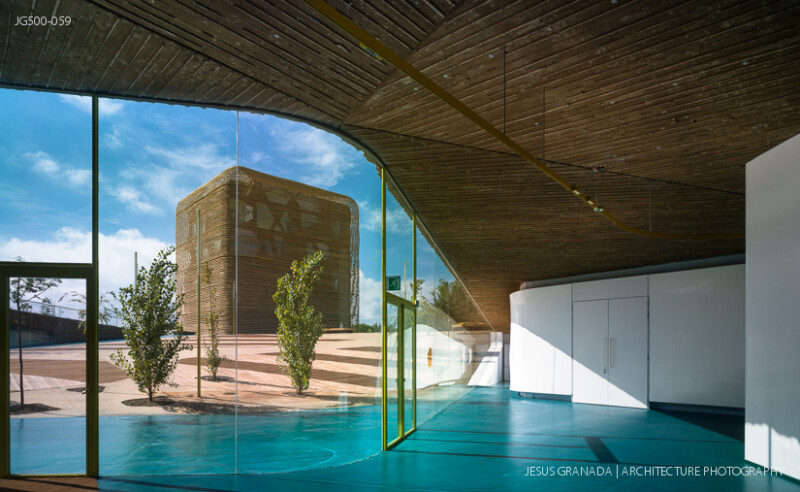
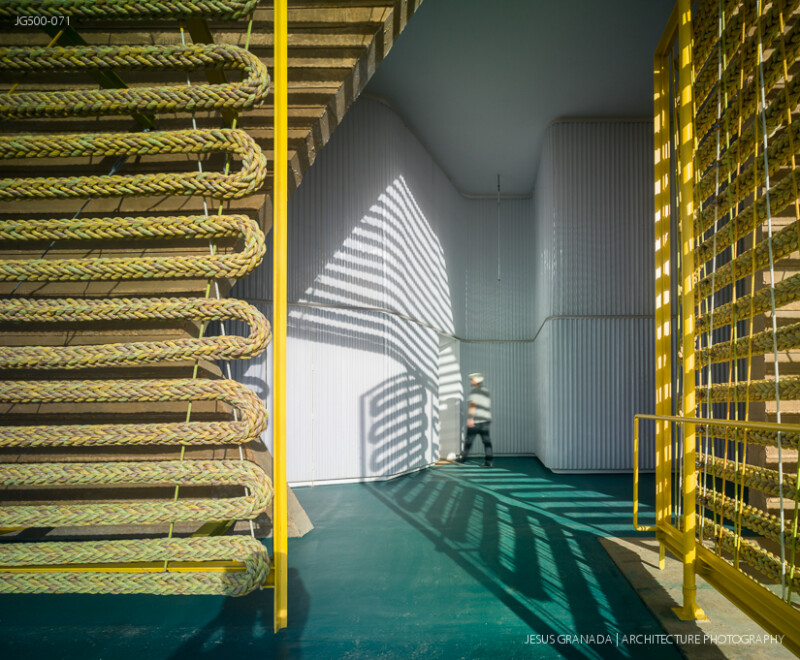
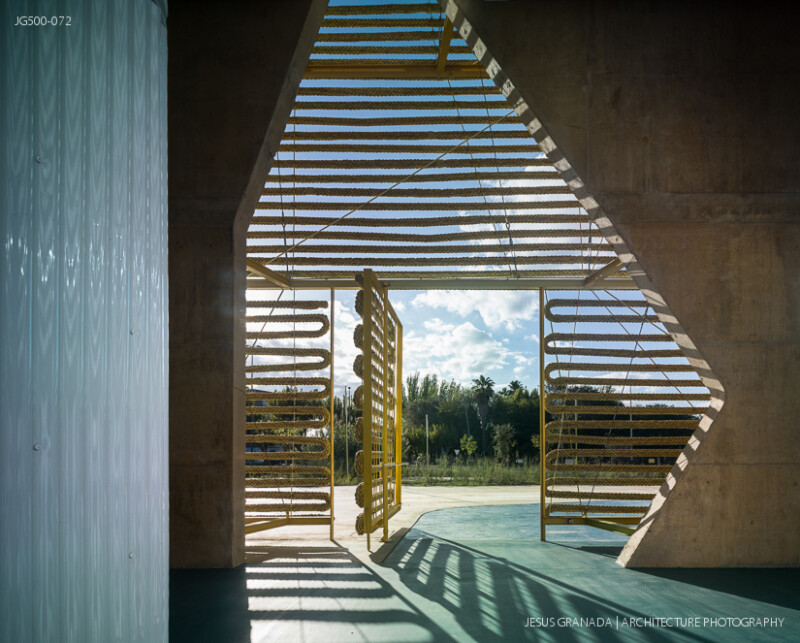
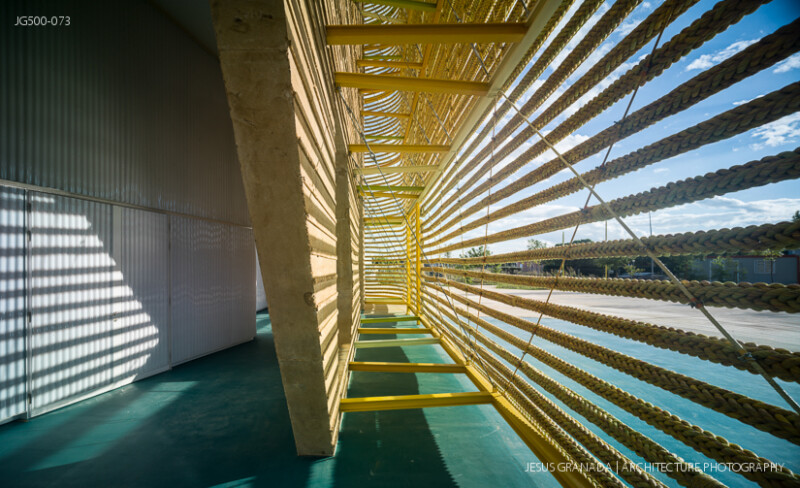
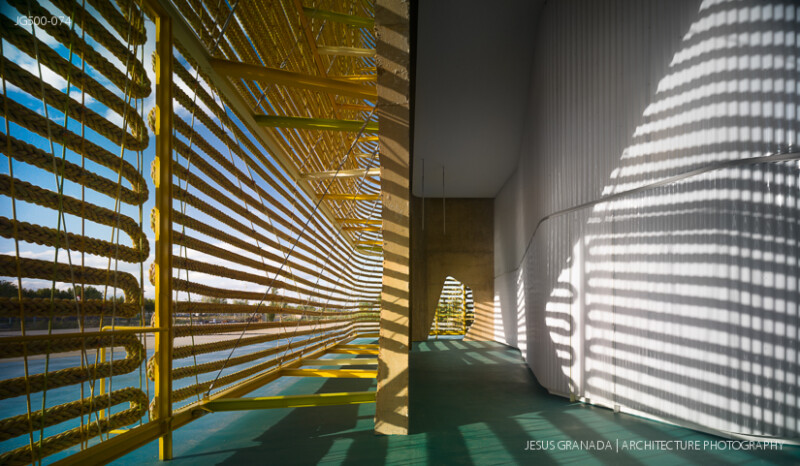
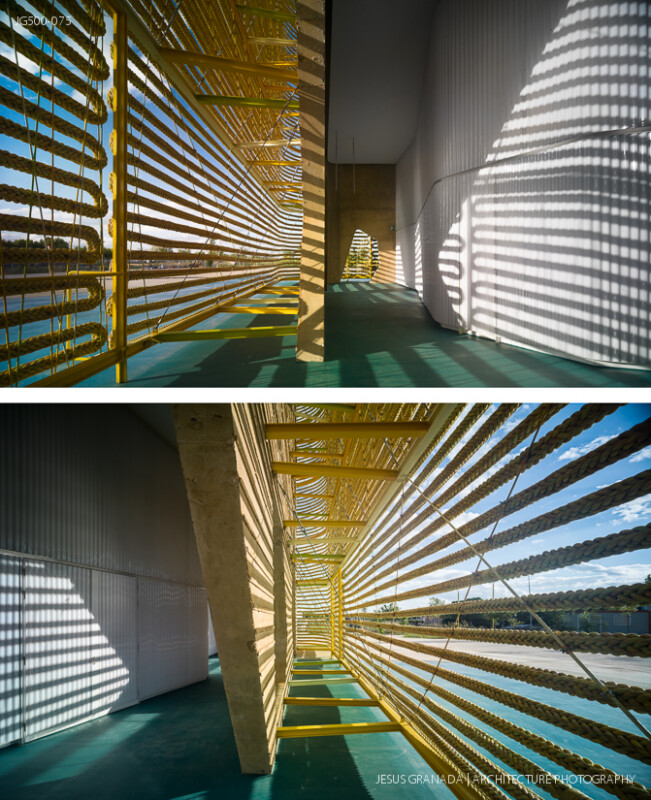
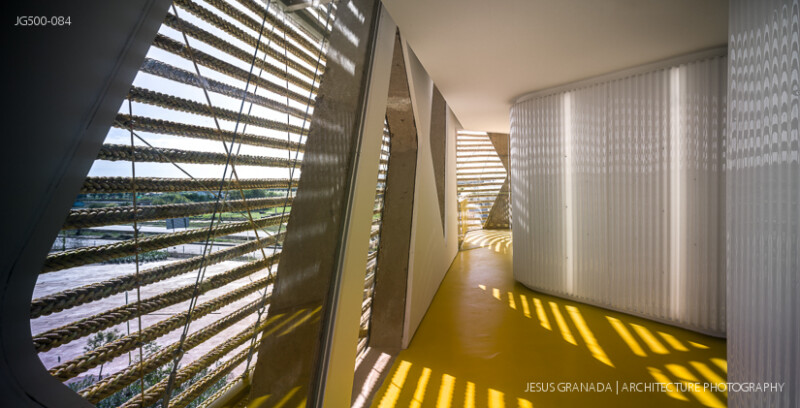
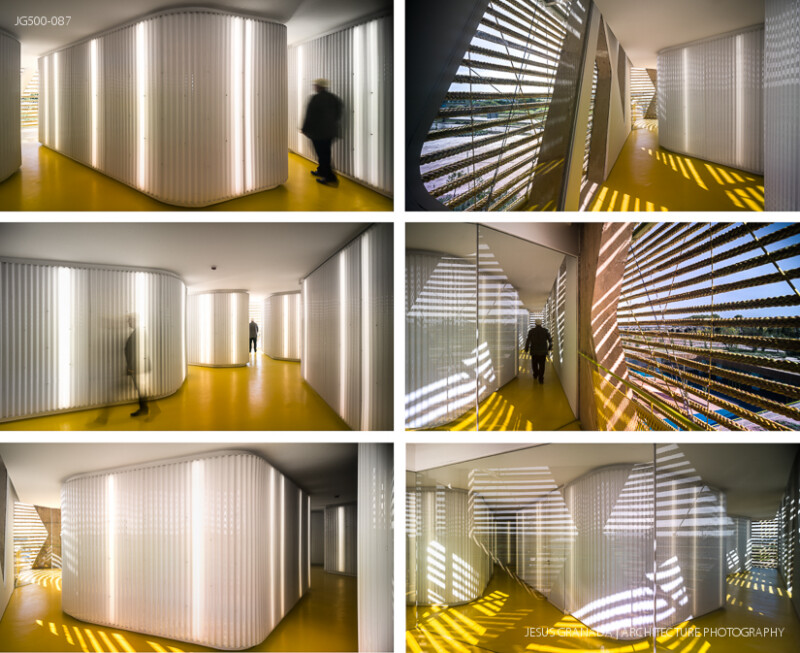
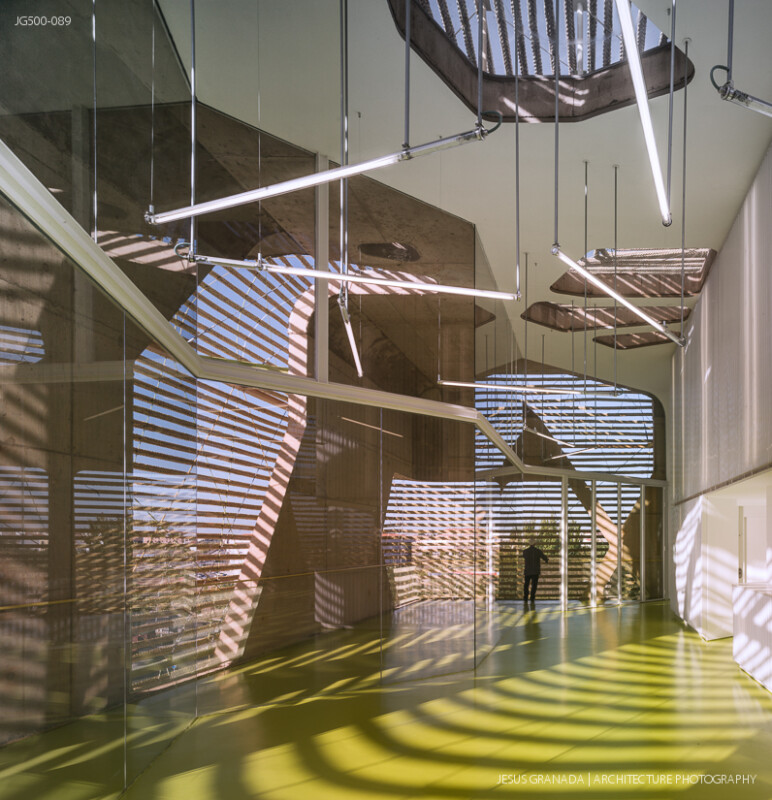
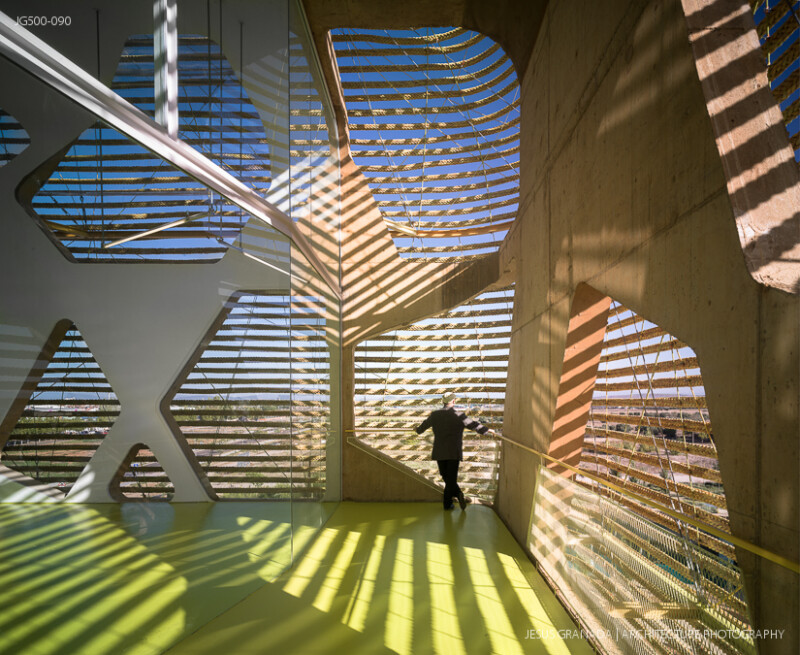
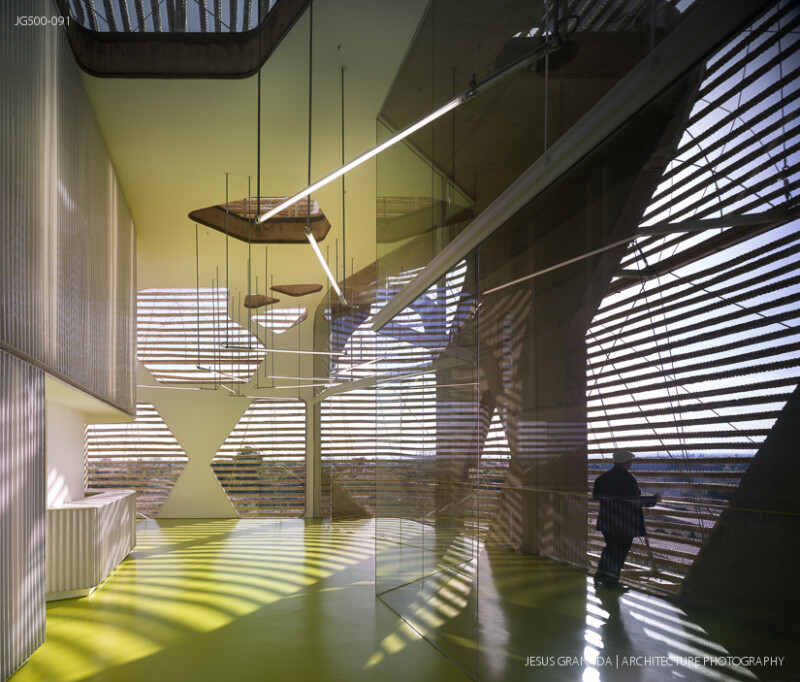
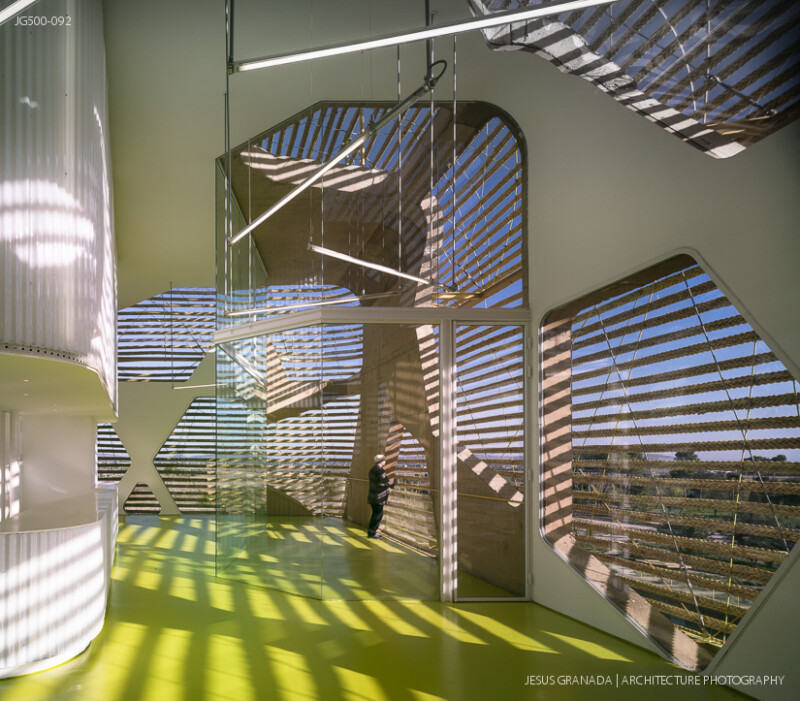
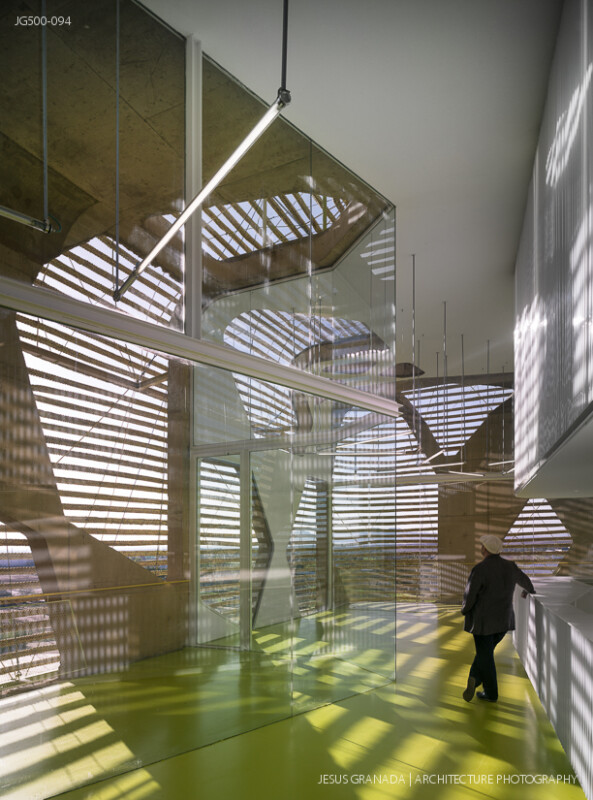
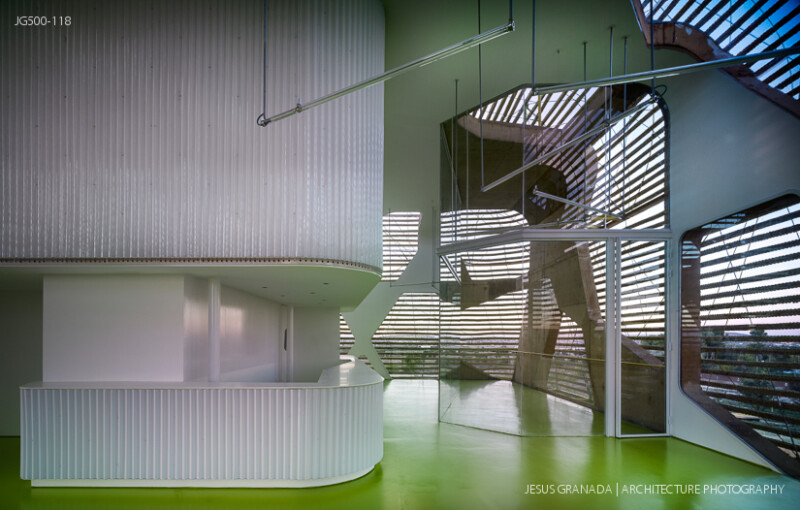
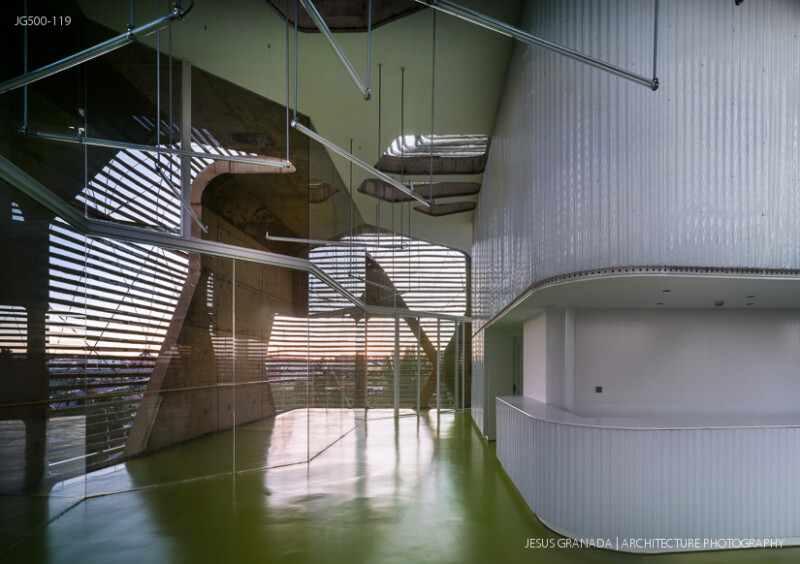
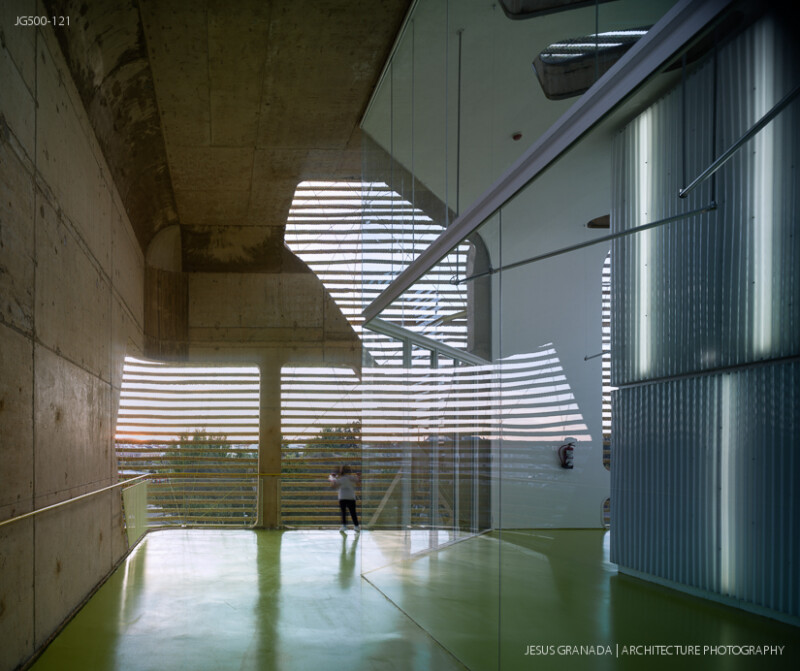
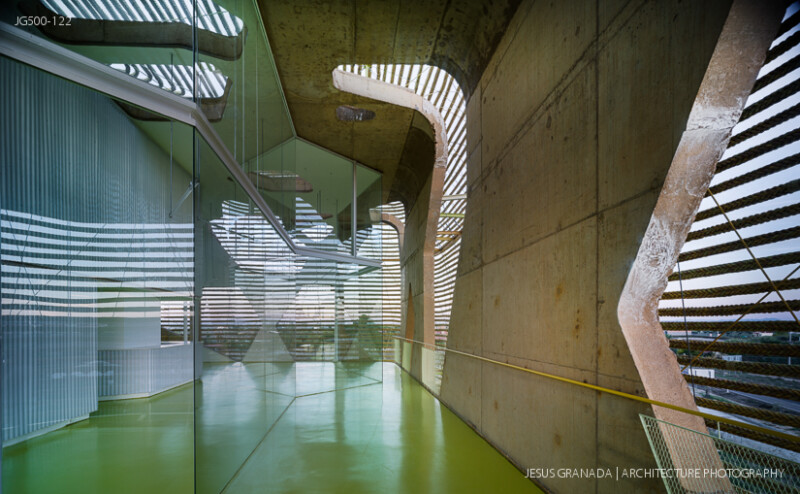
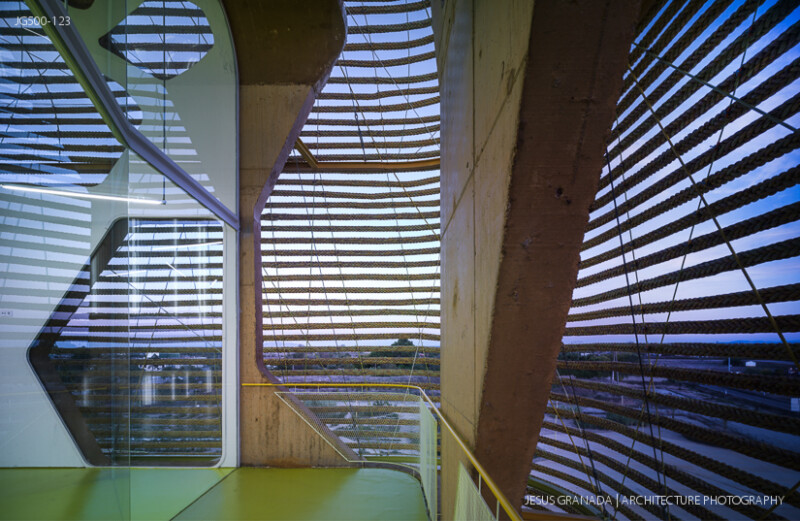
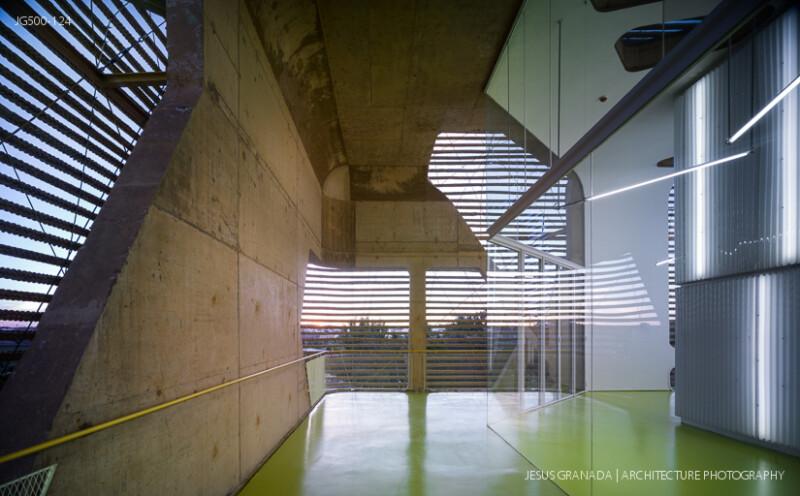
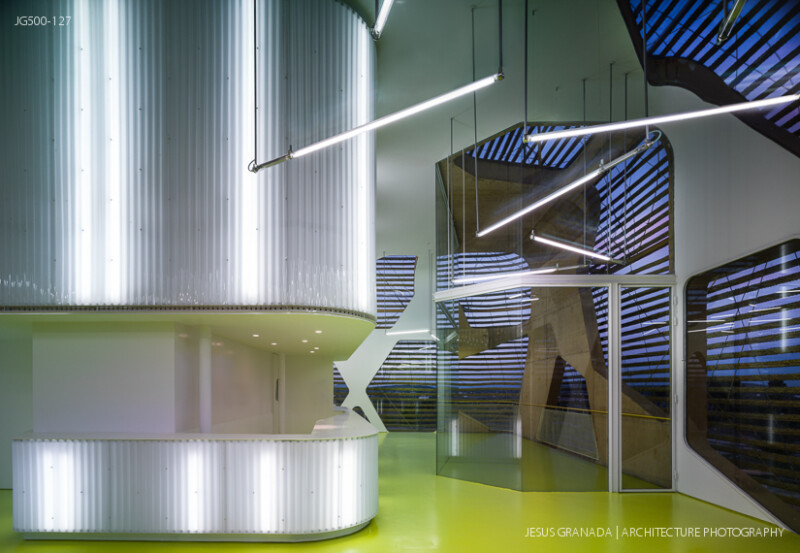
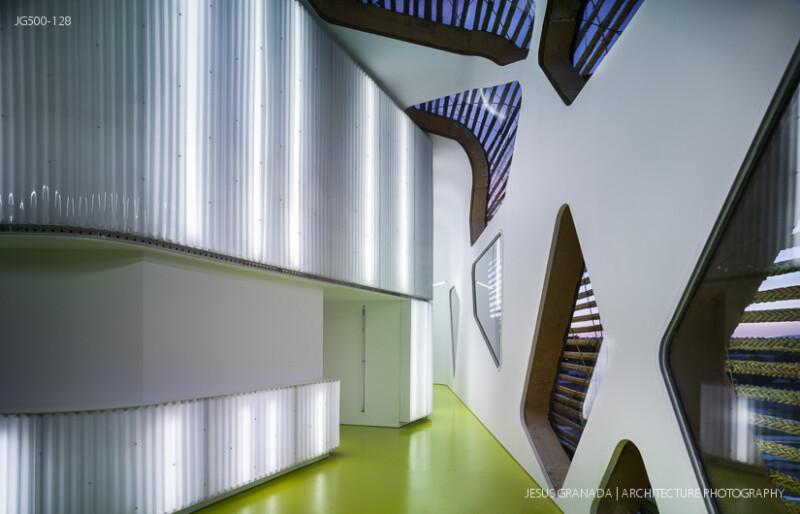
On one hand, it is introverted, hidden and neutral in its earthy materiality, offering a garden that is the real main facade of the building. At the same time it is outgoing, as it seeks both to see from the roof terraces as to be seen wrapped in a woven web of ropes. In the different floors of the cube stands the ticket offices, administration, rehearsal rooms and a restaurant located on the top floor, a vantage point becoming a city reference.
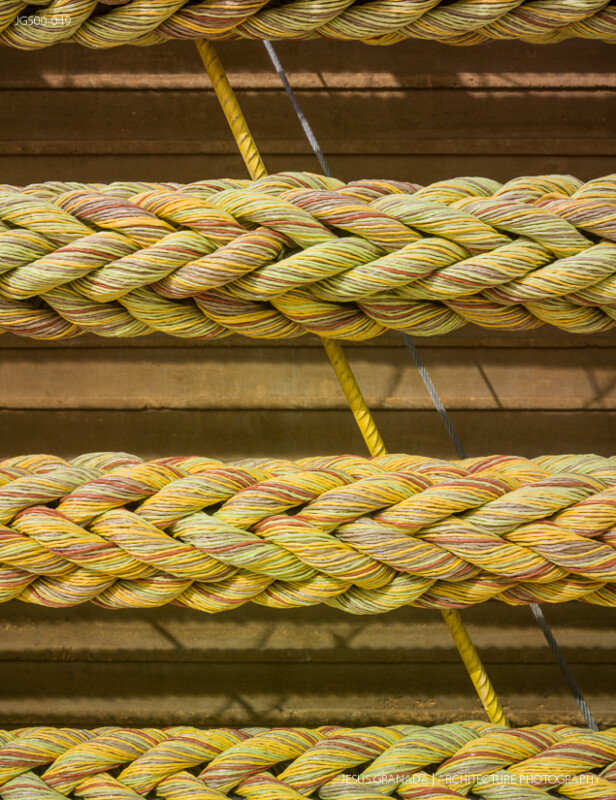
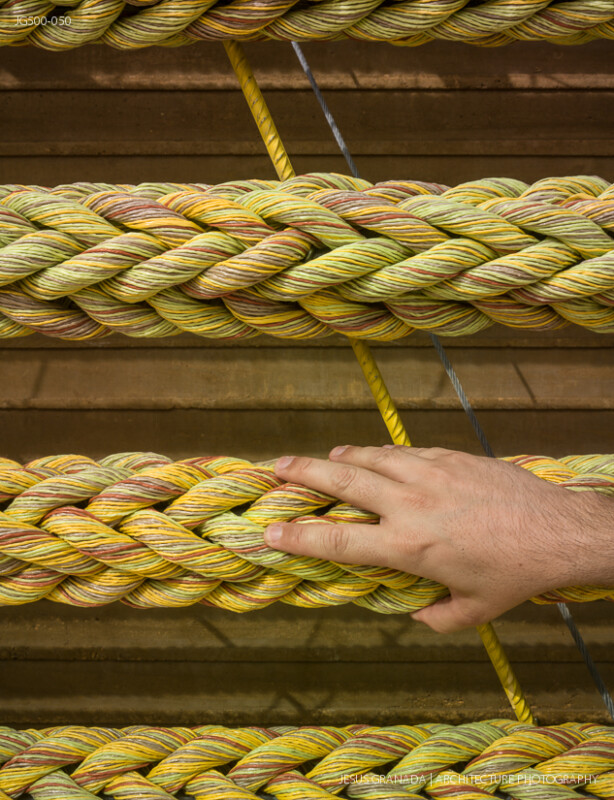
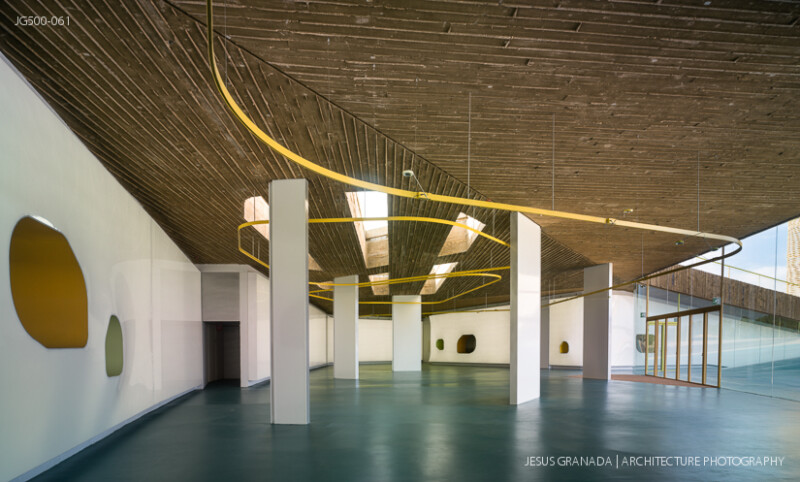
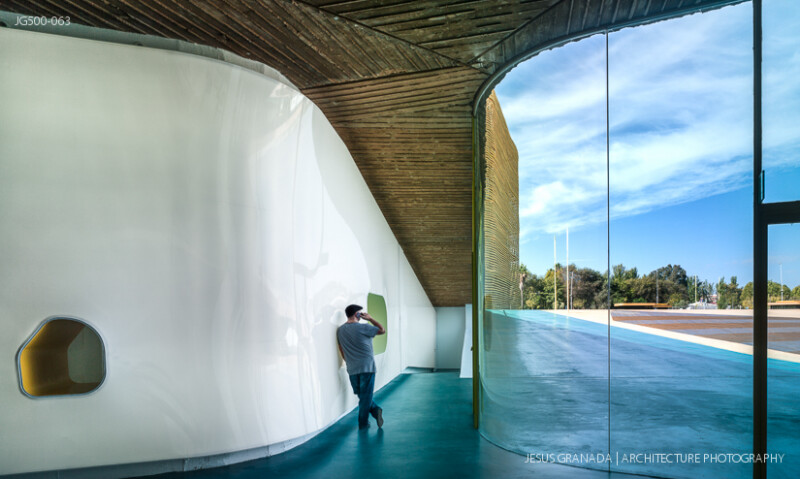
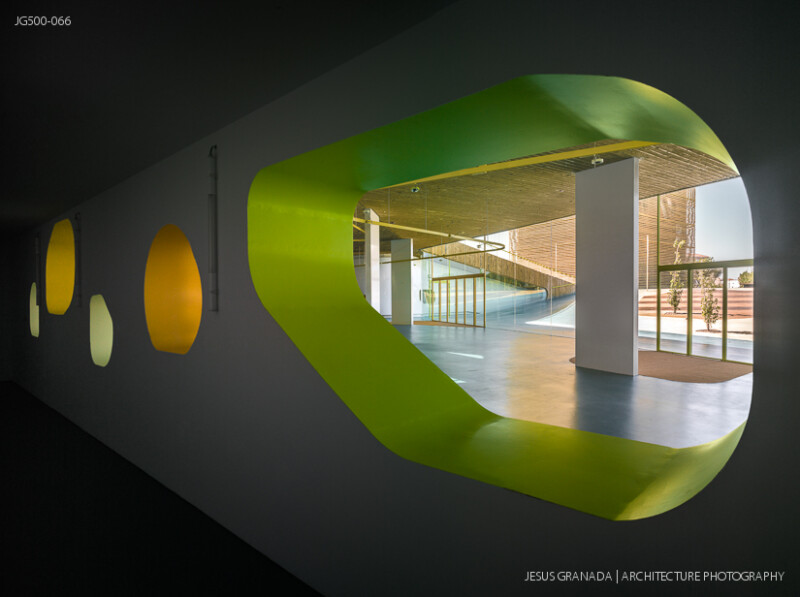
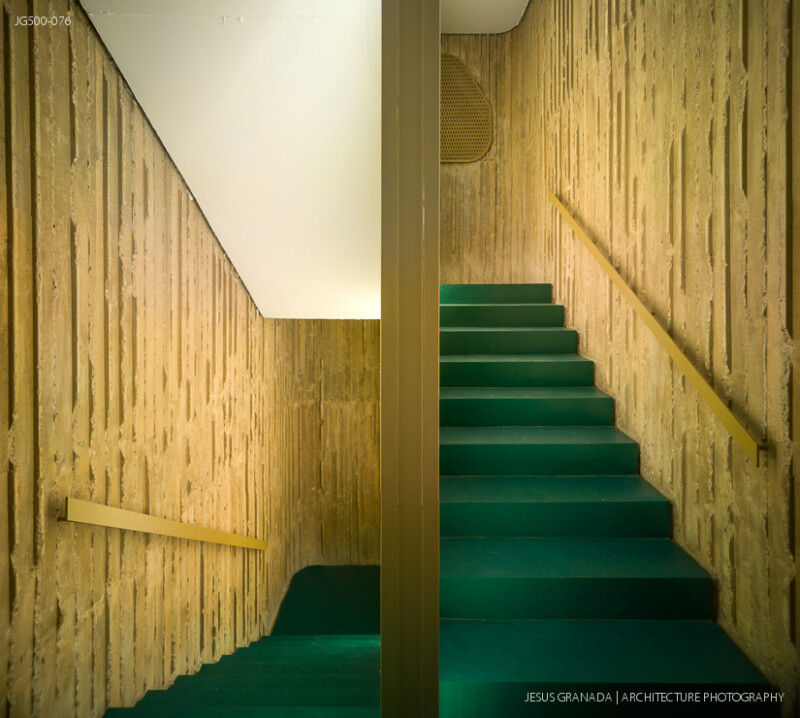
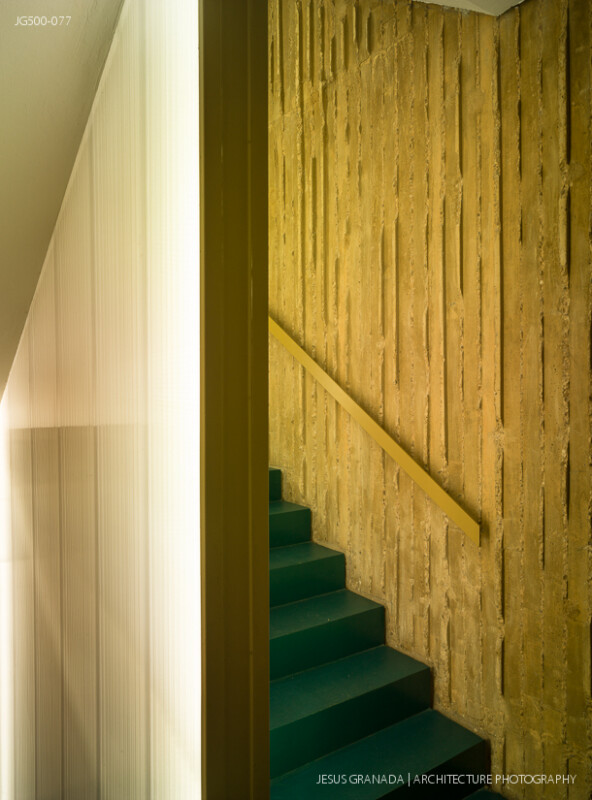
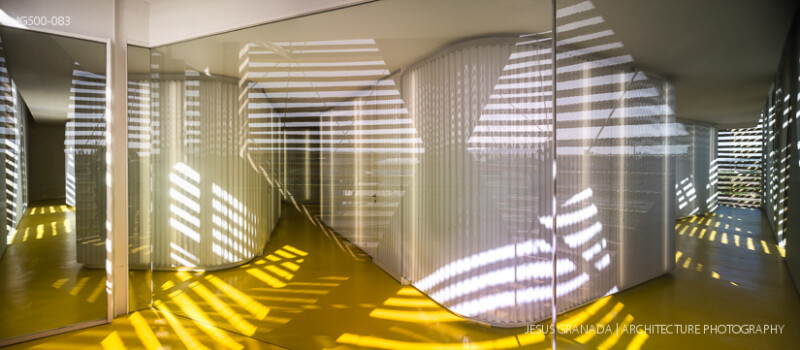
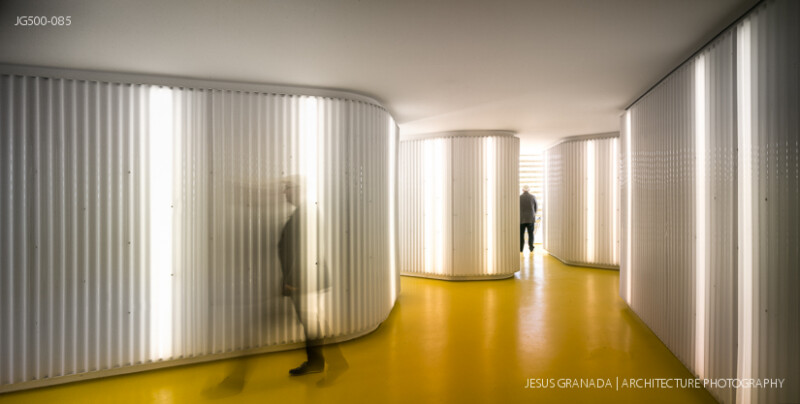
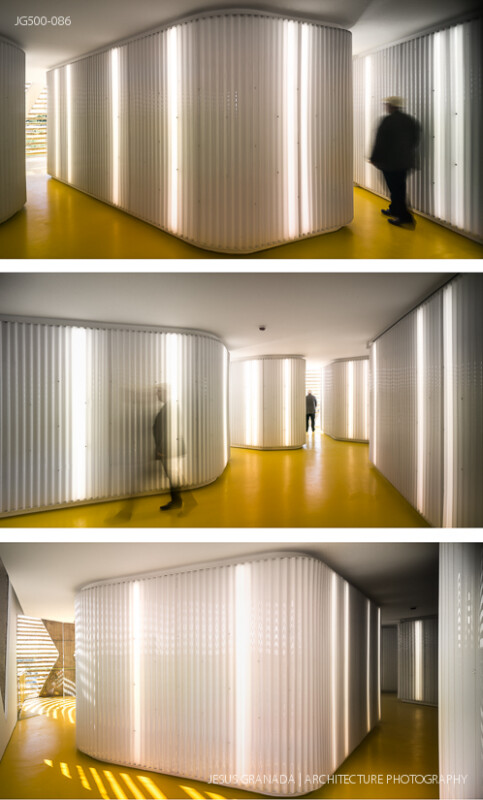
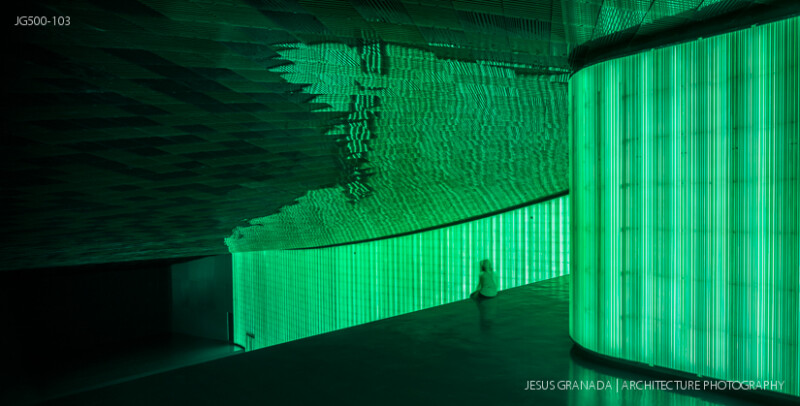
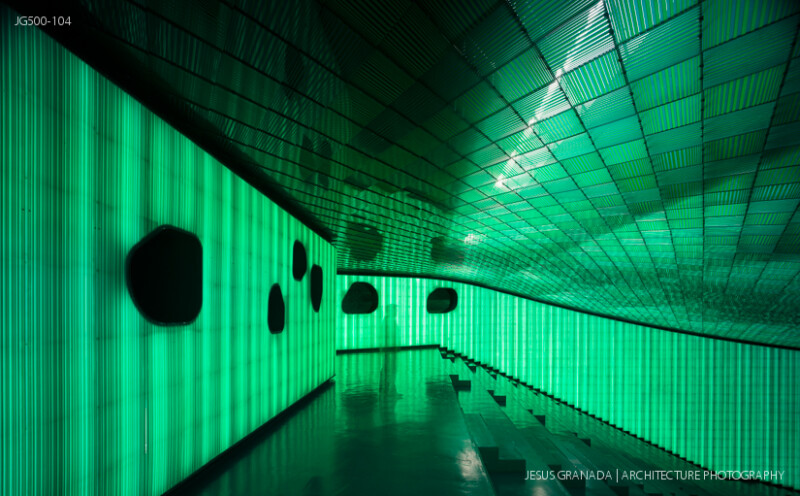
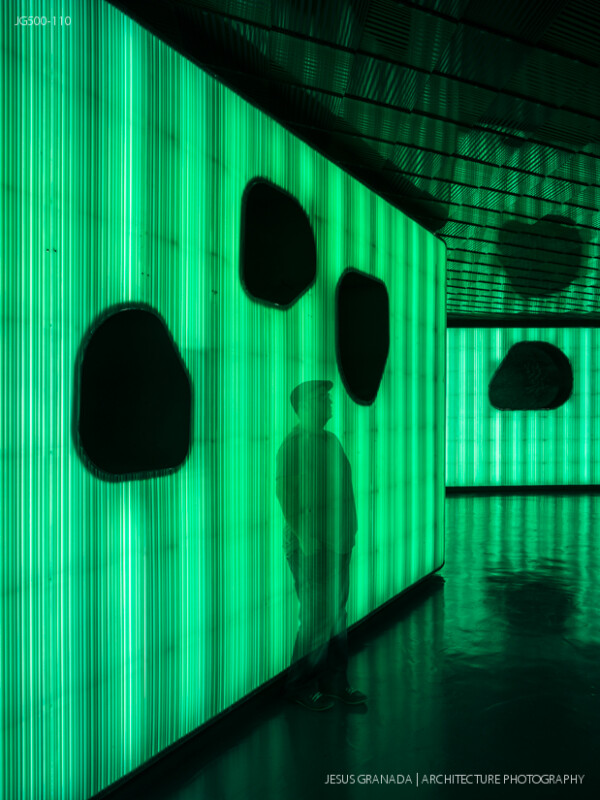
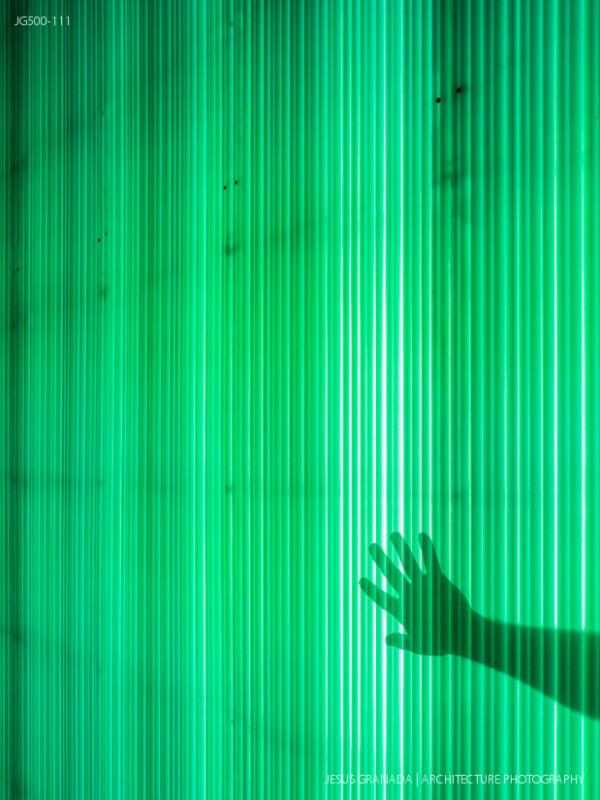
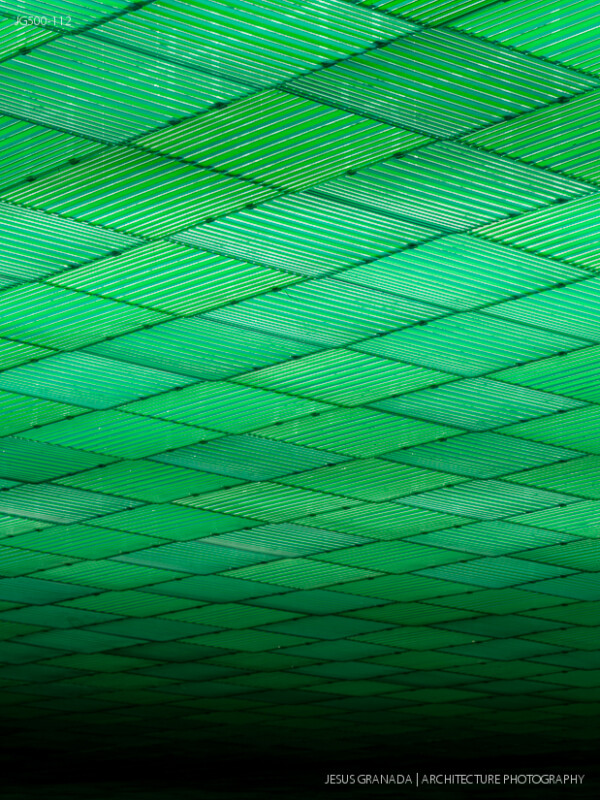
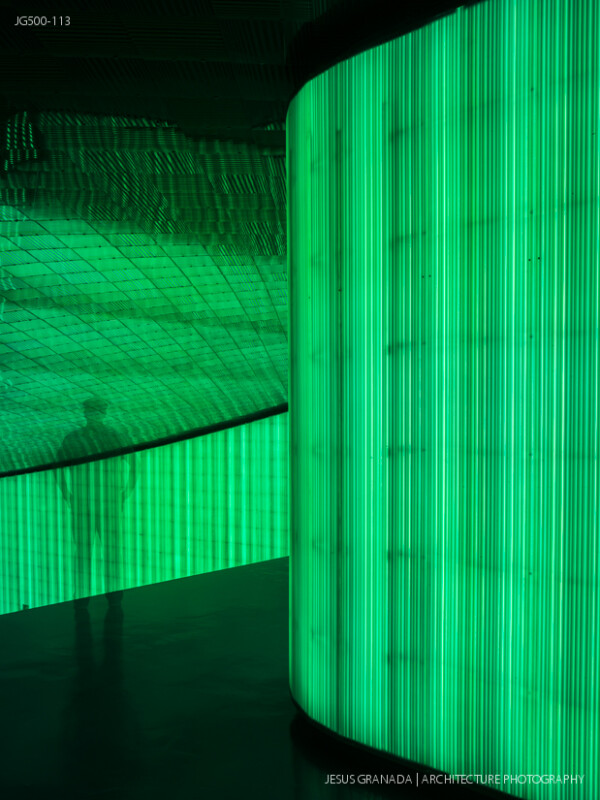
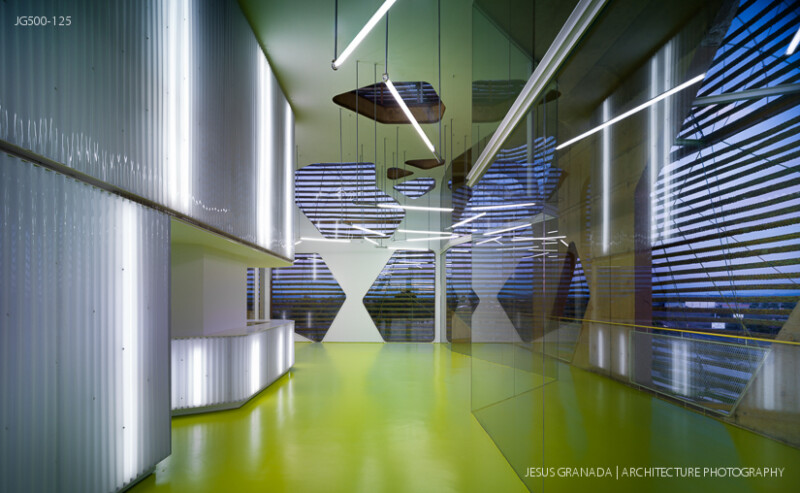
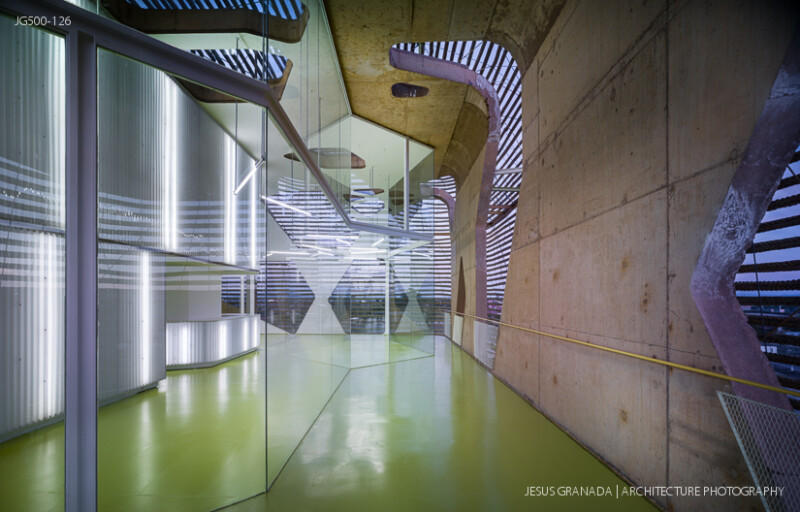
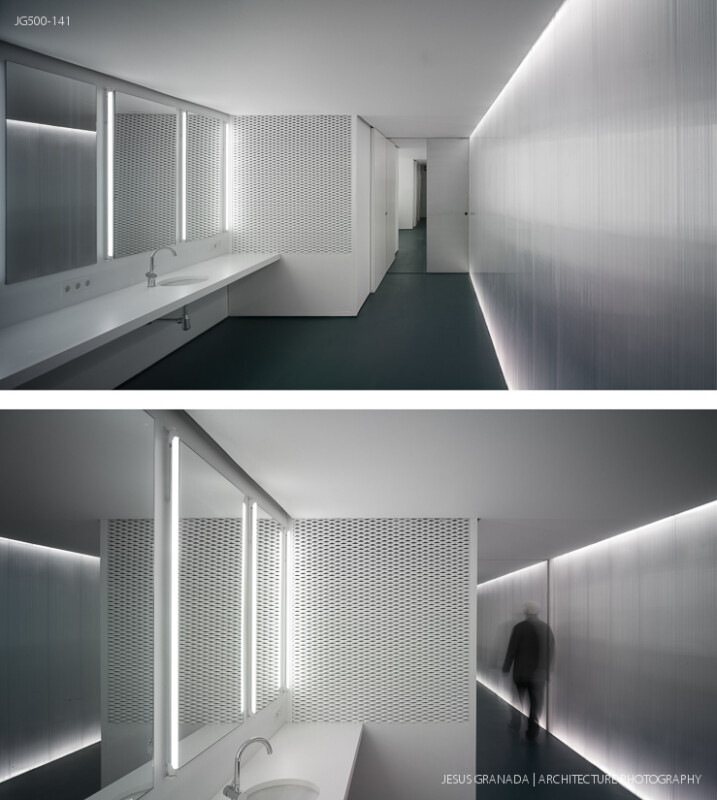
There is a material ambiguity in the general configuration of the building, in the tone of the concrete that is the same of the surrounding land, in the colors of vegetation transferred to the threads that make up the ropes of the facades and the watery nature of the interior finishes. There is also a fluctuating atmosphere where spaces change its character from daylight to night, from east to west, from natural to artificial.
It is a silent object that aims to go unnoticed, but at the same time lights to be visible on the horizon, a lighthouse in the sea of the Extremadura’s field.
Photo report
Project data
- Architects
- Luis Pancorbo, José de Villar, Carlos Chacón, Inés Martín Robles
- Location
- Villanueva de la Serena, Badajoz, Extremadura
- Quantity surveyor
- Manuel Trenado, José Luis Gómez (adobearquitectura)
- Structural engineering
- Juan Rey, Pablo Vegas, Jacinto Ruiz Carmona (Mecanismo)
- Services / MEP
- Rafael Úrculo, Sergio Rodríguez (Úrculo Ingenieros)
- Collaborators
- Acoustics: Higini Arau (Arau Acústica) / Models: Gilberto Ruiz
- Contractor
- Placonsa (Eloy Montero, Julio Oreja)
- Design
- 2008
- Construction
- 2010-2017
- Area
- Main hall 800 seats, 726.25 m² / Chamber hall 274 seats, 283.35 m²
- Budget
- 10,505,187.20 €
- Photography
- © Jesús Granada, 2015
- Materials
- Concrete: OH / Concrete colorant: Serra Ciment / Steelwork: Talleres Bacca, Celasa SL / Plasterboard: Tabicoex / Glass: Tvitec / Ropes: Cotesi + Lastra y Zorrilla / Glass fiber and silicone membrane: Newmat + Ainsis / Polycarbonate: Polimertecnic / Continuous flooring: Alchemica + Politay / Wooden flooring: Carpintería Vía de la Plata / Plumbing: Foncal / Sanitary ware: Duravit, Flaminia / Climate: Airland, Gestión Sauter, Toberas Trox, García Barata / Electricity: Electricidad Candela y Vallel / LED: Indulamp Energy / Lighting: Viabizzuno, Sammode, Airfal / Emergency lights: Daisalux / Elevators: Zener / Fire resistant doors: Demesel / Panic bars: Tesa / Fire and security: Ingesal / Gardening: Dijardin
Photographic report
- Inventory number
- JG0500
- Production date
- January 2015
- Cameras
- Sony α7RII · Hasselblad L1D-20c
- Lenses
- Canon TS-E 17 mm f/4L · 24 mm f/3.5L II · 50 mm f/2.8L Macro
Canon EF 70-200 mm f/4L USM · Hasselblad 28 mm f/2.8–f/11 - Postproduction
- María Arias de Saavedra
- Digital archive
- TIFF 8-bit · Adobe RGB 1998 · resolución 30 × 50 cm @ 400 ppi (tamaño medio)